
Discover the groundbreaking anti-cheat strategy in Escape from Tarkov, as Battlestate Games implements public shaming by revealing thousands of banned cheaters, fostering accountability and justice for dedicated players.
As I log into another raid in Escape from Tarkov, the tension is as palpable as the static before a thunderstorm. It's 2026, and the battle for the streets of Tarkov remains as fierce as ever, not just against AI scavs or rival PMCs, but against an insidious threat that undermines the very fabric of the game: cheaters. The developers at Battlestate Games have always waged a relentless war on this front, but their latest tactic feels like a seismic shift in strategy. Moving beyond silent bans and automated systems, they have embraced a tool as old as human society itself—public shaming. By publishing the names of thousands of banned accounts for all to see, they are not just removing bad actors; they are building a monument to accountability, a digital pillory for the modern age.
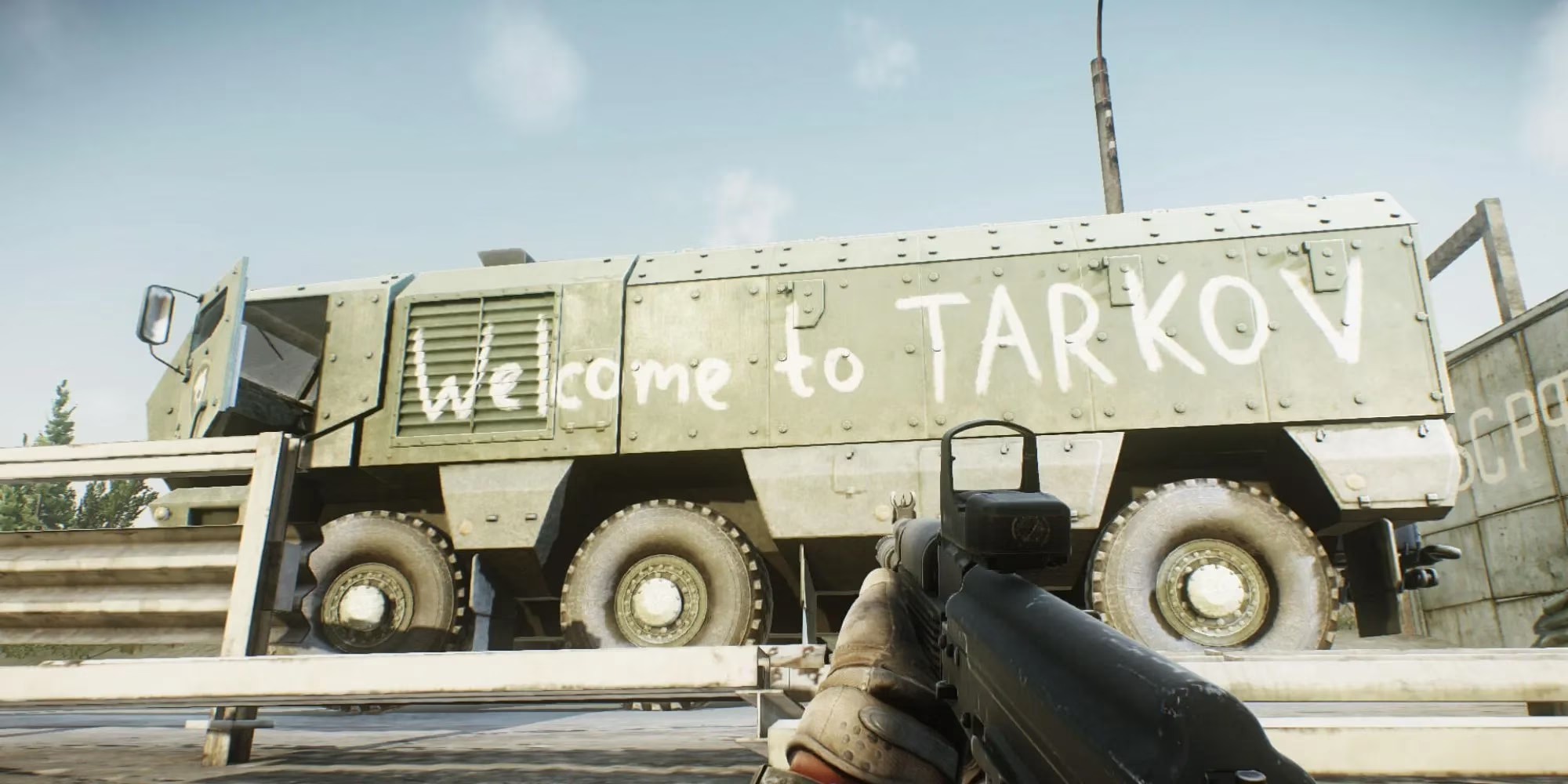
The initiative, which began in earnest a few years back, has evolved into a cornerstone of Battlestate's anti-cheat philosophy. According to their latest communiqués, the public list—a living document that is updated with the grim regularity of a metronome—has seen over 6,700 accounts added in a single, recent purge. A Battlestate spokesperson, echoing the fiery rhetoric of COO Nikita Buyanov, stated the goal is crystalline: "We want honest players to see the nicknames of cheaters to know that justice has been served and the cheater who killed them in a raid has been punished and banned." This transparency is a double-edged sword. For the legitimate player, it’s a balm for frustration, a tangible sign that their reports matter. For the cheater, it’s a scarlet letter etched into their digital identity.
The community's reaction has been a complex tapestry. Many players, myself included, have welcomed the move. Seeing a familiar, suspicious name on that list provides a closure that a generic "action has been taken" message never could. It turns abstract enforcement into personal vindication. However, a vocal minority remains skeptical, their trust frayed by years of struggle. Some on forums argue that these public ban waves are merely a form of high-stakes damage control, a performative act to placate an angry player base. They demand more: names from before the current system, more data on detection methods, proof that the roots of the problem are being addressed, not just the symptoms pruned. This skepticism is the healthy immune response of a community that has been burned before.
Battlestate's approach, while dramatic, is not operating in a vacuum. The entire industry grapples with this hydra. I can't help but recall Valve's masterstroke in Dota 2, where they laid a cunning code-based trap, a digital honeypot that ensnared tens of thousands of cheaters in one go. It was a solution as elegant as it was devastating. Comparatively, Battlestate's public shaming list can feel like a blunt instrument—but sometimes, a hammer is what you need for a nail. Where Valve's method was a silent, surgical strike, Battlestate's is a town crier’s proclamation, designed as much for deterrence and player morale as for punishment.
Here is a brief comparison of the two philosophies:
| Aspect | Battlestate's Public Shaming | Valve's Trap Method |
|---|---|---|
| Primary Goal | Transparency & Player Reassurance | Stealth Detection & Mass Banning |
| Visibility | High (Public Lists) | Low (Behind-the-scenes) |
| Community Impact | Immediate, morale-boosting | Delayed, but highly effective |
| Deterrence Factor | Potentially high (social stigma) | High (fear of unknown detection) |
Looking at the current landscape in 2026, the war is far from over. Cheaters adapt like cunning shadows that reshape themselves to slip through any new light. Battlestate's volunteer-led report vetting system, combined with this public ledger of shame, represents a multi-pronged defense. It’s a recognition that technology alone isn't enough; the community must be weaponized as both sensor and jury. Every time I glance at that list, it’s a reminder. It tells me that the developer's rage against the "scum of the earth," as Buyanov once called them, is not just hot air. It’s a sustained, visible campaign. For a game as punishing and personal as Escape from Tarkov, where loss cuts deep, knowing that fairness is being fought for—and the defeats of the unjust are being cataloged for all to see—is as crucial as a well-stocked medkit. It’s a promise that the arena, however brutal, strives to be level. The list is more than data; it’s a manifesto, a declaration that in Tarkov, your sins will find you out, and your name might just end up on the wall.