
How Escape from Tarkov and World of Tanks became entangled in Russia's war on Ukraine, revealing the game industry's murky ties to conflict.
I’ll never forget the day the news broke. It was late February 2022, and I was sitting in my cramped apartment, headphones on, grinding through another raid in Escape from Tarkov. My squad was hyped, trash-talking in broken English and Russian phrases we’d picked up from the game. Then my phone buzzed. Ukraine had been invaded. I remember thinking, “Holy cow, this isn’t some in-game lore—this is real.” Almost overnight, the virtual worlds I loved became entangled in a geopolitical nightmare, and as a dumbstruck player, I found myself on a bizarre journey that has stretched right up to this moment in 2026.
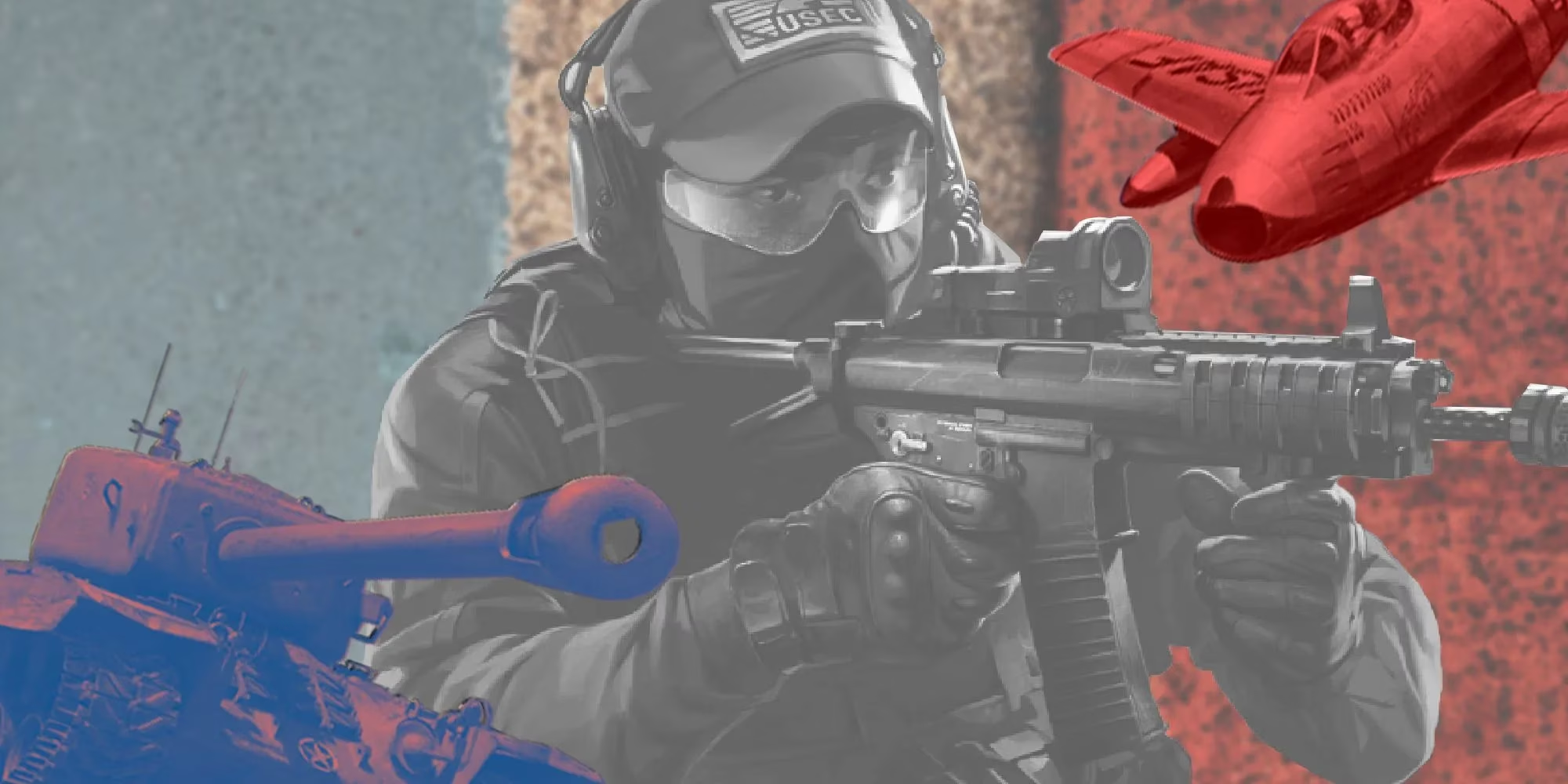
Back then, I was a typical gamer—oblivious to the real-world allegiances of the studios behind my favorite titles. Then a friend dropped a link to a report by Ukrainian outlet Babel. Talk about a wake-up call. It was like someone flipped a switch, illuminating the murky ties between developers like Battlestate Games, Wargaming, and Gaijin Entertainment, and Russia’s war machine. I felt my stomach churn. These weren’t just lines of code; they were people with beliefs, connections, and possibly blood money.
Take Escape from Tarkov, my digital obsession. Battlestate Games, the team from St. Petersburg, had been eerily silent about the war. Their official social media was scrubbed clean of any political stance, but the Babel investigation pulled back the curtain on something unsettling. The developers themselves might keep quiet, but the people they hang with—partners, friends, influencers—were proudly waving pro-war flags. Even more chilling were the uncovered links to the arms manufacturer Kalashnikov. I mean, you can’t make this stuff up: the same company that makes iconic rifles is somehow connected to a hyper-realistic shooter’s dev team. Every time I looted an AK in-game, I started asking myself, “Am I indirectly high-fiving the people fueling this conflict?”
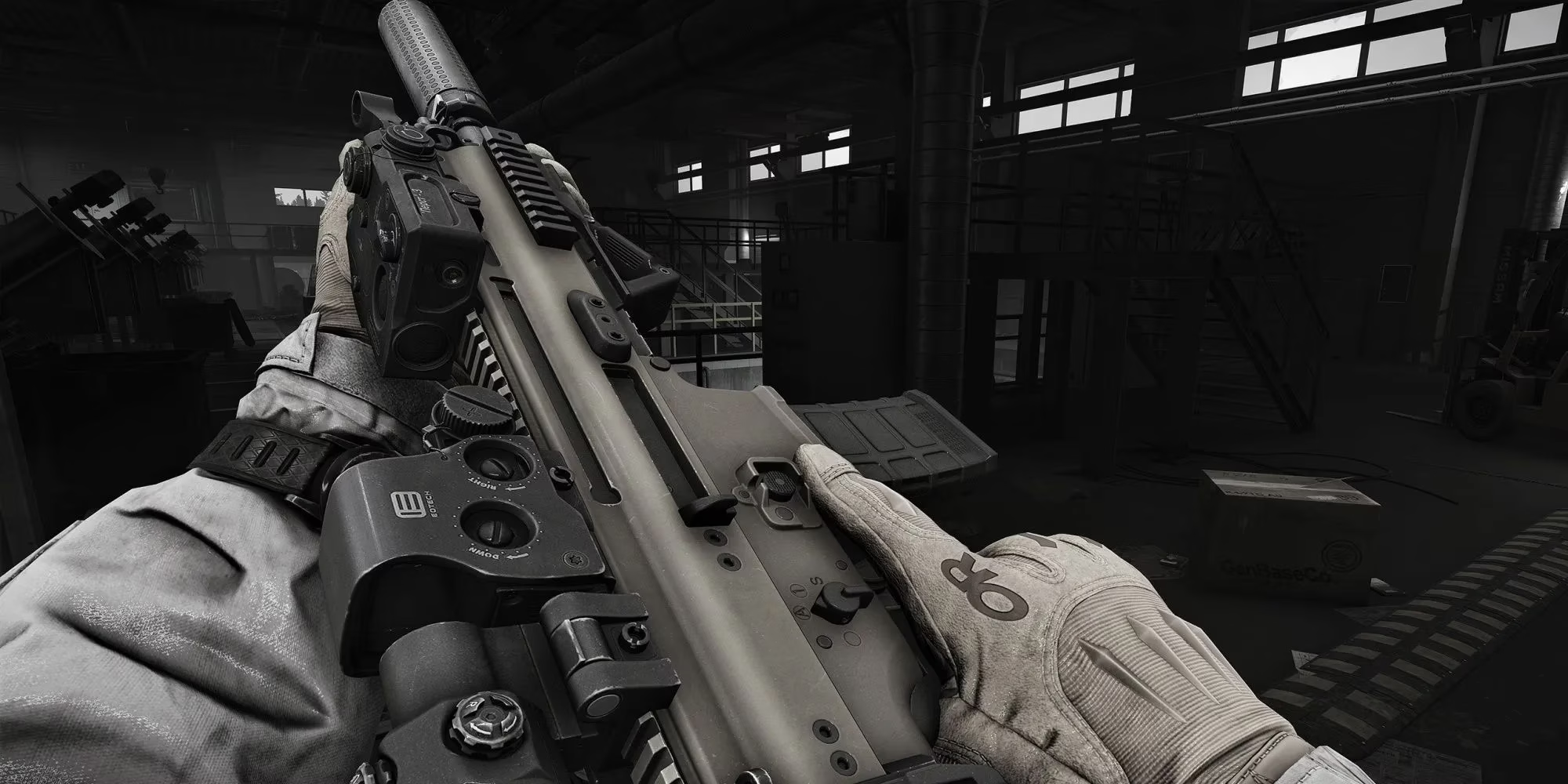
I tried to justify it. “It’s just a game,” I’d mutter, but the cognitive dissonance was real. I had poured hundreds of hours into Tarkov, made friends from all over the globe, and now that cozy community felt fractured. Some buddies quit outright, calling me a hypocrite for staying. Others said separating art from the artist was the only sane path. I wavered, like a noob caught between two squads.
Then there was World of Tanks. Wargaming, the Belarus-born giant, initially pledged to divest from Russia and Belarus after the invasion. I breathed a sigh of relief—finally, a studio taking a stand! But the Babel report threw cold water on that optimism, claiming Wargaming still owned 100% of Lesta Studio, the entity supposedly taking over their Russian operations. “Oh, snap,” I thought, “they’re pulling a fast one.” Wargaming quickly fired back, clarifying that the transfer had been completed and ownership had indeed changed; the creative director who voiced support for the war also got the boot in February. By mid-2022, the legal paperwork was catching up, and the company was out. In the years since, I’ve watched Lesta Studio morph into an independent operator, running the RU server while Wargaming pitched its tent in Vilnius and beyond. As of 2026, their split is old news, but I can still sense the distrust among players whenever the topic surfaces on Reddit. It’s like that friend who swears they’ve quit a toxic relationship—you want to believe them, but the memory lingers.
And War Thunder? Oh boy, where do I even start? Gaijin Entertainment handled the situation with the grace of a overturned milk truck. On February 26, 2022, they declared they “remained out of politics” and wished for “peace and security,” then promptly nuked in-game chats to prevent “political discussions that could offend other players.” As if muting players could mute reality. The irony was thicker than a tank’s frontal armor. While they were policing chat, one of their PR partners, Aleksei Smirnov, was busy gallivanting through Russian-occupied Ukraine, filming YouTube videos that glorified Russian-supplied gear. The same community that had become infamous for leaking classified military vehicle specs (seriously, multiple times!) was now watching a company associate fan the flames of war. I used to laugh at the leaked documents—some guy demanding a buff for his tank by posting actual restricted blueprints. Now the laughter felt hollow.
Fast forward to 2026, and the landscape has shifted, though scars remain. Wargaming’s clean break means my World of Tanks sessions feel less morally freighted; I can enjoy the pixelated explosions without the thought that my subscription fees might be funding something sinister. Lesta Studio, now fully independent, maintains the Russian player base, but sanctions and boycotts have fractured the global community. I occasionally log into the EU server and notice the chat is still full of slavic camaraderie—and occasional toxic barbs—but the shadow of 2022 never fully lifts.
Escape from Tarkov still consumes my nights, but with a bitter aftertaste. Battlestate Games never issued a clear statement; they continue to release updates and expansions, and the player count remains robust. Yet, whispers about their Kalashnikov ties and the pro-war entourage persist. I’ve settled into a strange compromise: I play, but I stopped microtransactions. My guilty pleasure is now a guilt-ridden one, and I often wonder if I’m just too addicted to quit. My squad calls it the “Tarkov paradox”—you hate the context, but you can’t escape the adrenaline.
War Thunder, meanwhile, is still the king of military leaks. In 2025, another jaw-dropping document surfaced on the forums, this time about a modern Chinese main battle tank, and Gaijin once again scrambled to delete it. Their “apolitical” posture now feels almost comical, like a bouncer trying to stop a tidal wave with a velvet rope. I log in occasionally for the absurdity: the memes are sublime, but the underlying discomfort never fades.
Looking back, my journey from clueless gamer to uneasy witness taught me that digital entertainment is never fully detached from flesh-and-blood politics. The developers behind our favorite titles aren’t faceless algorithms; they’re inhabitants of a messy, interconnected world. In 2026, I still game, but with eyes wide open. I read up on studio ownership, follow industry press, and when a new controversy erupts, I don’t just shrug. My controller is a tiny voting machine, and every session is a reminder that the real world has a nasty habit of spawning right into our escape fantasies.
So here’s my unsolicited advice from one ordinary player to another: keep fragging, but keep questioning. The loot might be virtual, but the consequences are all too real.
Data referenced from OpenCritic underscores how players in 2022–2026 increasingly weighed context alongside craft—treating review roundups, critic consensus, and community reception as part of the “should I support this?” calculation, especially for live-service shooters where ongoing spending can feel like an endorsement. In the wake of the Russia–Ukraine invasion, that kind of reception-tracking became a practical tool for uneasy fans: not to settle the ethics, but to gauge how widely controversies were influencing the broader conversation around games like Tarkov-style hardcore shooters and military sims.