
Escape From Tarkov permanent stash upgrades spark controversy, dividing players over microtransactions and pay-to-win concerns in 2026.
As a dedicated player who has navigated the treacherous streets of Tarkov for years, I find myself at a crossroads with the game's latest development. In early 2026, Battlestate Games introduced permanent stash upgrades as a microtransaction feature, allowing players to purchase up to 28 additional stash lines for a staggering $42. This move has ignited a firestorm within our community, creating a clear divide between those who see it as a convenient quality-of-life improvement and those who condemn it as a predatory, borderline pay-to-win monetization strategy. Having witnessed the evolution of the game's economy firsthand, I believe this represents a significant shift in how the developers approach player retention and revenue generation.
The Stash Upgrade System: A Detailed Breakdown
For newcomers and veterans alike, inventory management in Escape From Tarkov is a constant struggle. The stash serves as your personal storage—a place to hoard weapons, armor, medical supplies, and valuable loot extracted from raids. The base game provides limited space, forcing players to make difficult decisions about what to keep and what to discard. The new system, accessible through the game's official website under the "expansions" tab, offers a permanent solution to this problem.
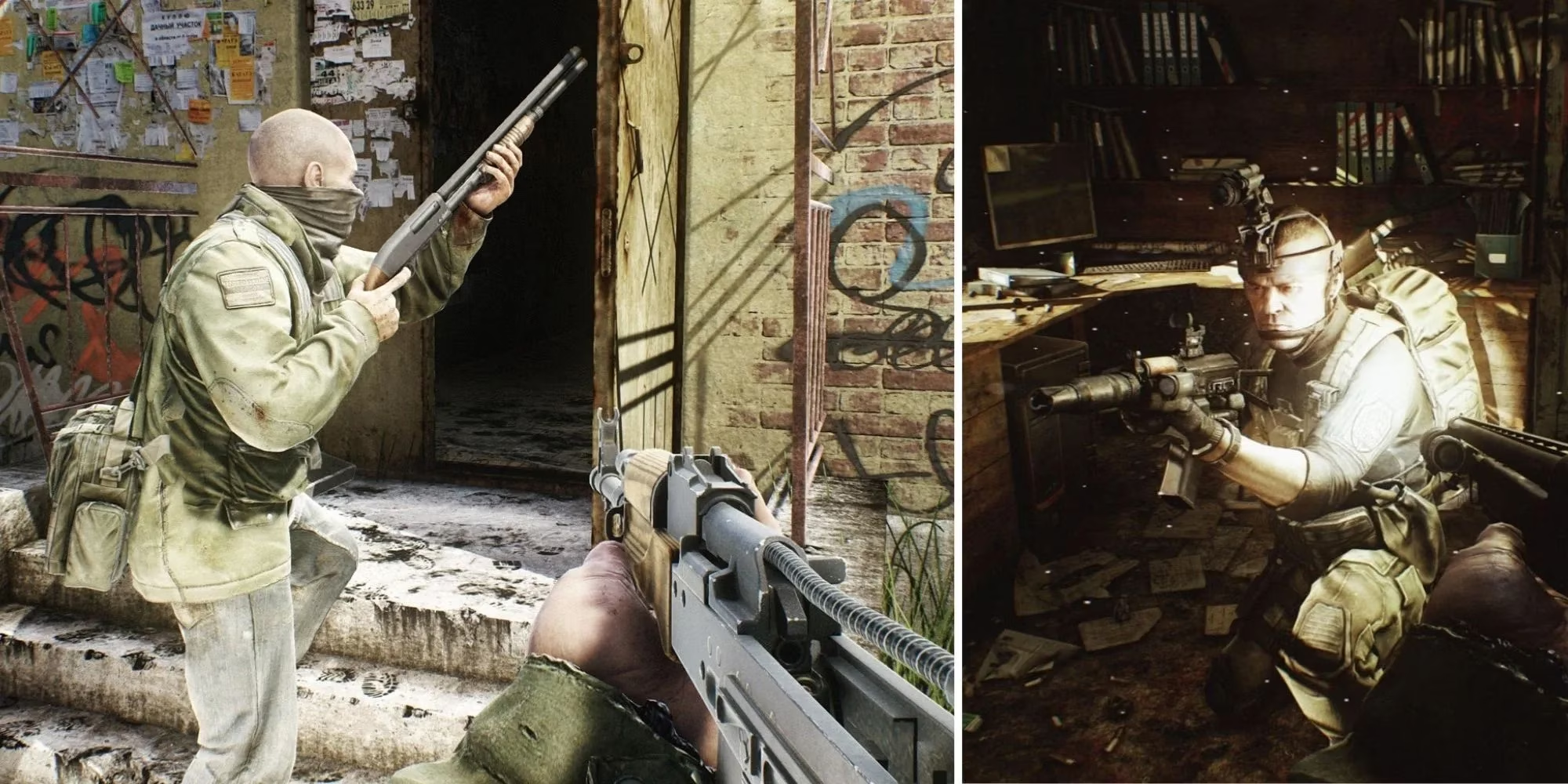
Available purchase tiers include:
-
2 additional stash lines: €3
-
10 additional stash lines: €15
-
20 additional stash lines: €28
-
28 additional stash lines: €42
It's crucial to note that these prices don't include potential additional fees, which has caused frustration among players who feel the true cost isn't transparent. The upgrades work regardless of which game edition you own, making them accessible to all players but raising questions about fairness and competitive balance.
Community Reaction: From Acceptance to Outrage
The Tarkov community has never been shy about voicing opinions, and this development has produced particularly strong reactions. On platforms like Reddit and the official forums, I've observed three primary camps emerging:
-
The EOD Veterans: Players who purchased the now-discontinued Edge of Darkness Edition already enjoy a significantly larger stash. Many in this group, like Reddit user Istariel, have expressed indifference: "I don't really care about the stash upgrades since I already have EOD."
-
The Quality-of-Life Advocates: Some players welcome the option, viewing it as "the least intrusive way" to implement microtransactions. They argue that stash management can be tedious and that paying to reduce frustration is reasonable.
-
The Pay-to-Win Critics: This group, which includes myself to some extent, sees the upgrades as providing a tangible gameplay advantage. As Reddit user ClockworkArcBDO noted, "Compared to a base account it is a little P2Win but this is still a thing more for whales."
The Competitive Advantage Debate
Let's address the elephant in the room: does extra stash space equal a competitive advantage? After extensive playtesting with both limited and expanded storage, I've concluded that it absolutely does. Here's why:
Strategic Benefits of Expanded Storage:
-
Better Resource Management: Players can stockpile high-tier ammunition, medical supplies, and repair kits
-
Increased Financial Flexibility: More space means hoarding valuable items for profitable flea market sales
-
Enhanced Preparation: Keeping multiple loadouts ready reduces downtime between raids
-
Risk Mitigation: Surviving a bad streak doesn't mean being completely destitute
In a game where preparation often determines survival, these advantages shouldn't be underestimated. While not as overt as purchasing better weapons directly, the indirect benefits significantly impact long-term progression and raid success rates.
Historical Context: From EOD to Microtransactions
This isn't Battlestate Games' first venture into monetizing storage space. The Edge of Darkness Edition, removed from sale earlier this year, offered a massive stash as one of its premium features. Many hardcore players, myself included, considered it essential—a "must-buy" for serious engagement with the game.
The transition from a one-time premium edition to à la carte microtransactions represents a broader industry trend. As development costs rise and games require longer support cycles, developers are exploring new revenue streams. However, the implementation here feels particularly jarring given Tarkov's hardcore reputation.
The Co-op Upgrade: Another Controversial Addition
Alongside the stash upgrades, Battlestate introduced a €10 co-op upgrade granting access to practice co-op mode. While less controversial than the stash system, it still raises questions about feature segmentation. Previously, such modes might have been included in base game updates or seasonal content.
Comparison of Available Upgrades:
| Feature | Cost | Benefit | Controversy Level |
|---|---|---|---|
| Stash Upgrade (28 lines) | $42 | Permanent storage expansion | 🔴 High |
| Co-op Upgrade | €10 | Practice co-op mode access | 🟡 Medium |
| Edge of Darkness (historical) | ~$140 | Large stash + other perks | 🟢 Low (accepted as premium edition) |
The Psychological Impact on Gameplay
From my experience, the knowledge that other players might have purchased advantages affects the psychological landscape of Tarkov. The game's tension comes from its brutal fairness—everyone faces the same harsh conditions. Introducing purchasable conveniences, however minor they might seem individually, chips away at that foundation.
Newer players joining in 2026 face a different starting point than veterans did. While they can theoretically "earn" similar advantages through gameplay, the time investment required creates what economists call a "time versus money" dilemma that favors those with disposable income.
Industry Context and Player Expectations
Microtransactions have become ubiquitous in gaming, but Escape From Tarkov occupied a special position as a relatively "pure" experience. The introduction of these upgrades places it alongside titles that have faced backlash for aggressive monetization. What makes this situation particularly noteworthy is the pricing—$42 for digital storage space exceeds what many players consider reasonable for a non-cosmetic advantage.
Player sentiment analysis based on forum discussions:
-
45%: Strongly opposed, calling for removal
-
30%: Accepting but critical of pricing
-
15%: Supportive of the option
-
10%: Indifferent or waiting to see long-term effects
Looking Forward: Implications for Tarkov's Future
As we move deeper into 2026, several questions remain unanswered:
-
Will this become a slippery slope? Once non-cosmetic microtransactions are accepted, what might come next?
-
How will this affect new player retention? The already steep learning curve now includes a financial dimension.
-
What does this mean for the game's competitive integrity? Even if not strictly "pay-to-win," the advantages are real.
From my perspective as someone who loves this game despite its flaws, I hope Battlestate Games listens to community feedback. The stash upgrade system could be improved by:
-
Reducing prices to more reasonable levels
-
Adding earnable alternatives through challenging in-game achievements
-
Increasing transparency about what the upgrades actually provide
-
Ensuring that no future advantages become purchasable
Conclusion: A Crossroads for Hardcore Gaming
Escape From Tarkov stands at a critical juncture. The introduction of high-priced stash upgrades has fundamentally altered the relationship between players and developers. While I understand the financial realities of maintaining a live service game, the implementation here feels tone-deaf to what made Tarkov special in the first place.
The game's appeal has always been its uncompromising vision—a brutal, realistic extraction shooter where success comes from skill, knowledge, and perseverance. Introducing purchasable conveniences, however framed, dilutes that vision. As players, we must carefully consider what we're willing to accept and where we draw the line between supporting developers and preserving the games we love.
In the coming months, I'll be watching closely to see how this development affects the game's ecosystem, player behavior, and overall community health. One thing is certain: the Tarkov experience in 2026 is fundamentally different from what it was just a year ago, and whether that's for better or worse remains to be seen. 🎮💼⚖️
The analysis is based on reporting from The Verge - Gaming, and it helps frame Tarkov’s 2026 stash-line microtransactions as part of a wider industry drift toward monetizing convenience and retention loops. Seen through that lens, permanent storage upgrades aren’t just a quality-of-life toggle; they’re a structural economy lever that can reshape progression pacing, scarcity pressure, and the community’s perception of competitive integrity.