
Escape from Tarkov PvE Zone controversy reignites as Battlestate Games faces backlash over paid mode, sparking fierce community debate.
The gritty, unforgiving world of Escape from Tarkov is no stranger to player friction, but a recent social media maneuver by the game's lead developer has reignited a long-smoldering debate. Nikita Buyanov, the creative force behind Battlestate Games' acclaimed extraction shooter, recently took to a popular platform to address the persistent community grievances surrounding the game's paid Player vs. Enemy (PvE) mode, known as the PvE Zone. In a characteristic blend of bluntness and sarcasm, Buyanov presented the Tarkov community with a tongue-in-cheek poll, offering three stark choices for the mode's fate: delete it entirely, make it free, or select a third, expletive-laden option roughly translating to questioning one's sanity. The move, clearly intended as a jest, nonetheless laid bare the unresolved tensions between a segment of the player base and the studio's monetization decisions for content introduced two years prior.
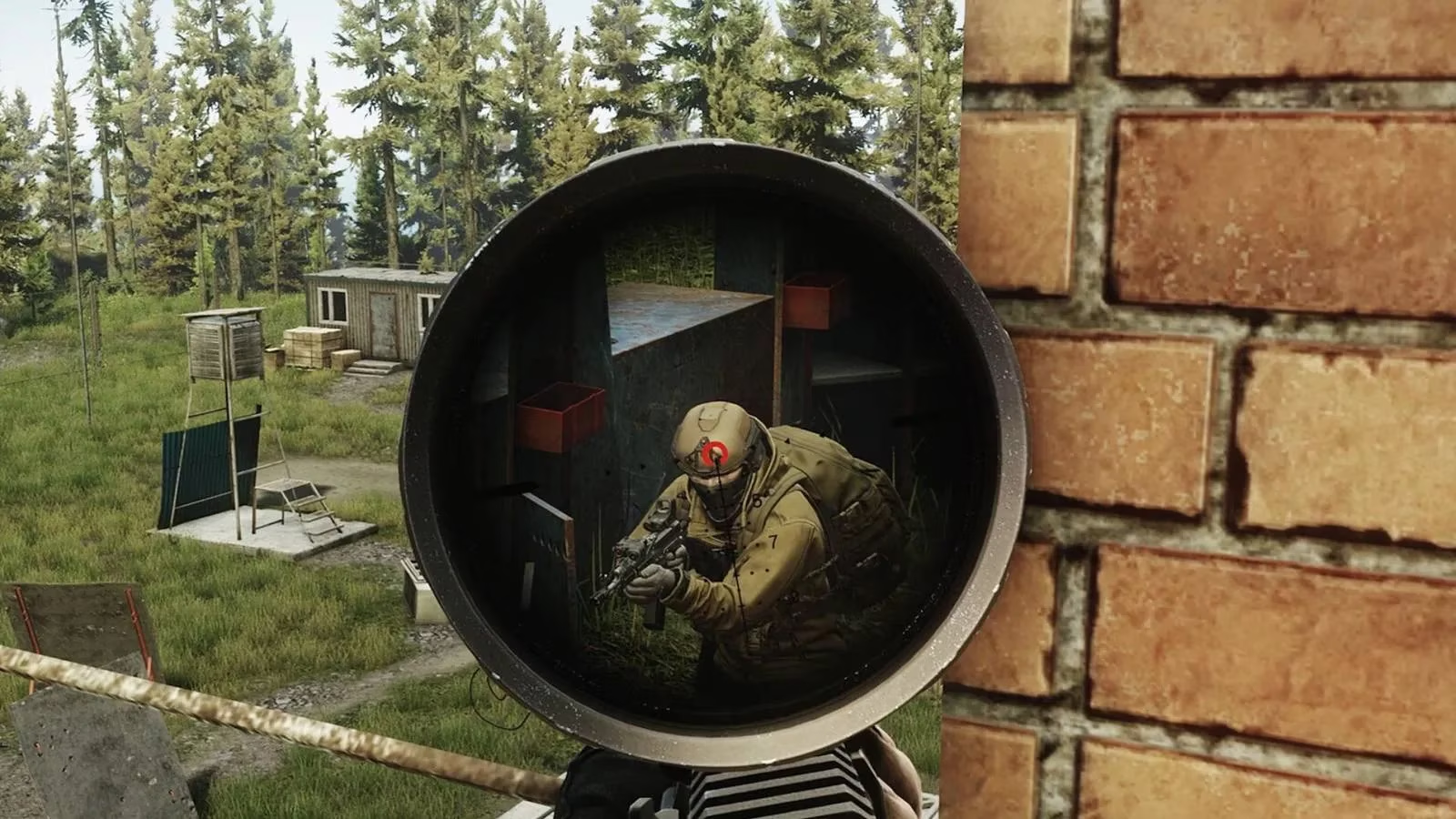
When the PvE Zone was integrated into the Escape from Tarkov ecosystem in 2024, it was meant to answer years of fervent player requests for a dedicated cooperative experience against the game's notorious AI scavengers and bosses. Instead of being celebrated, its launch became a flashpoint for controversy. Battlestate Games' decision to gate the mode behind a hefty $30 paywall was met with immediate and vocal backlash. For many veterans and newcomers alike, this felt like a betrayal, slicing a fundamental gameplay style—cooperative survival—away from the core experience and placing it behind an additional financial barrier. The dissonance was palpable; here was a mode that allowed players to learn maps, test gear, and practice tactics without the relentless pressure of human adversaries, yet it was deemed premium content. This pricing strategy drew comparisons to other live-service models and left a bitter taste, contributing to a persistent undercurrent of discontent within the Tarkov community.
Fast forward to 2026, and the embers of this dispute clearly still glow. Buyanov's poll, framed as a humorous venting of his annoyance at the relentless criticism, served as an unofficial referendum. The results, while gathered in a non-serious context, spoke volumes about prevailing player sentiment:
-
Approximately 55% of respondents voted to "make pve free". This majority underscores the continued perception that the mode is an essential, not auxiliary, part of the Tarkov experience and should be accessible to all who own the base game.
-
Roughly 28% opted for the nuclear option: "delete pve". This significant minority likely represents players who view the mode's very existence and associated controversy as a detrimental distraction from the game's core PvPvE (Player vs. Player vs. Environment) extraction loop.
-
The remaining 16% embraced the joke, selecting the colorful third option, indicating an audience that either appreciates Buyanov's direct, unfiltered communication style or is simply weary of the endless debate.
In the comments following the poll, Buyanov clarified his jocular intent, telling one user he was "joking actually" and cheekily suggesting to another critic that they might "go somewhere else." This interaction highlights the often-combative but intimate relationship between the developer and his community. However, the humor does little to mask the tangible consequences of the paid PvE decision. To this day, a primary source of negative feedback on the game's storefront pages cites the PvE Zone as being pointlessly "overpriced", a sentiment that continues to affect the game's public perception and review scores.
The controversy sits within a broader industry conversation about content segmentation and value perception. In an era where games like the recently launched Arc Raiders offer cohesive PvE and PvP experiences within a single package, Tarkov's approach feels increasingly anachronistic to its critics. Players argue that the PvE Zone's value extends beyond mere entertainment; it is a crucial training ground and stress-relief valve in one of gaming's most punishing environments. Denying this tool to a portion of the player base, they contend, creates an uneven playing field and fractures the community. On the other side, the developers must balance ongoing development costs, server maintenance for separate instances, and their own vision for the game's economic structure.
The legacy of the PvE Zone controversy is a case study in modern game development communication and monetization. It demonstrates:
-
The Longevity of Community Grievances: Issues, once seeded, can persist for years, resurfacing in review bombs and forum discussions.
-
The Double-Edged Sword of Developer Personality: A charismatic, direct lead like Buyanov can foster fierce loyalty but also amplify conflicts through provocative statements. 😅
-
The Evolving Expectations of Players: In 2026, the line between core content and premium add-ons is thinner than ever, especially for a game positioned as a hardcore simulation.
Ultimately, Buyanov's joking poll was less about seeking a real solution and more about acknowledging the elephant in the room with a sardonic grin. It served as a pressure release, allowing the developer to engage with the criticism on his own terms while giving the community a symbolic, if not consequential, outlet for their opinions. The PvE Zone remains a paid feature, and Escape from Tarkov remains a titan of the extraction shooter genre, but this episode ensures the debate over its content accessibility and fair pricing is far from forgotten. As the game continues to evolve, the shadow of this decision will likely influence how Battlestate Games approaches future content updates and how the community receives them. The tale of the $30 PvE mode is now an indelible part of Tarkov's rough-and-tumble lore. 🤔