
Escape from Tarkov's transformative patch 0.16.1.3 revolutionizes PvE with a complete AI detection overhaul and smarter combat behavior, making stealth gameplay genuinely viable and encounters more realistic.
As a dedicated player who has weathered the brutal winters of Tarkov, I can tell you the arrival of patch 0.16.1.3 feels like a genuine breath of fresh air—literally and figuratively. Developer Battlestate Games has just rolled out this significant update, shifting the in-game season to Spring and implementing a suite of changes that fundamentally alter the PvE (Player vs. Environment) experience. This isn't just a seasonal coat of paint; it's a deep, systemic rework of the AI Scavs and bosses we love to hate, making them more believable, less omniscient, and ultimately, a fairer fight. The goal is clear: to refine Escape from Tarkov's punishing realism as the game marches steadfastly towards its full release.
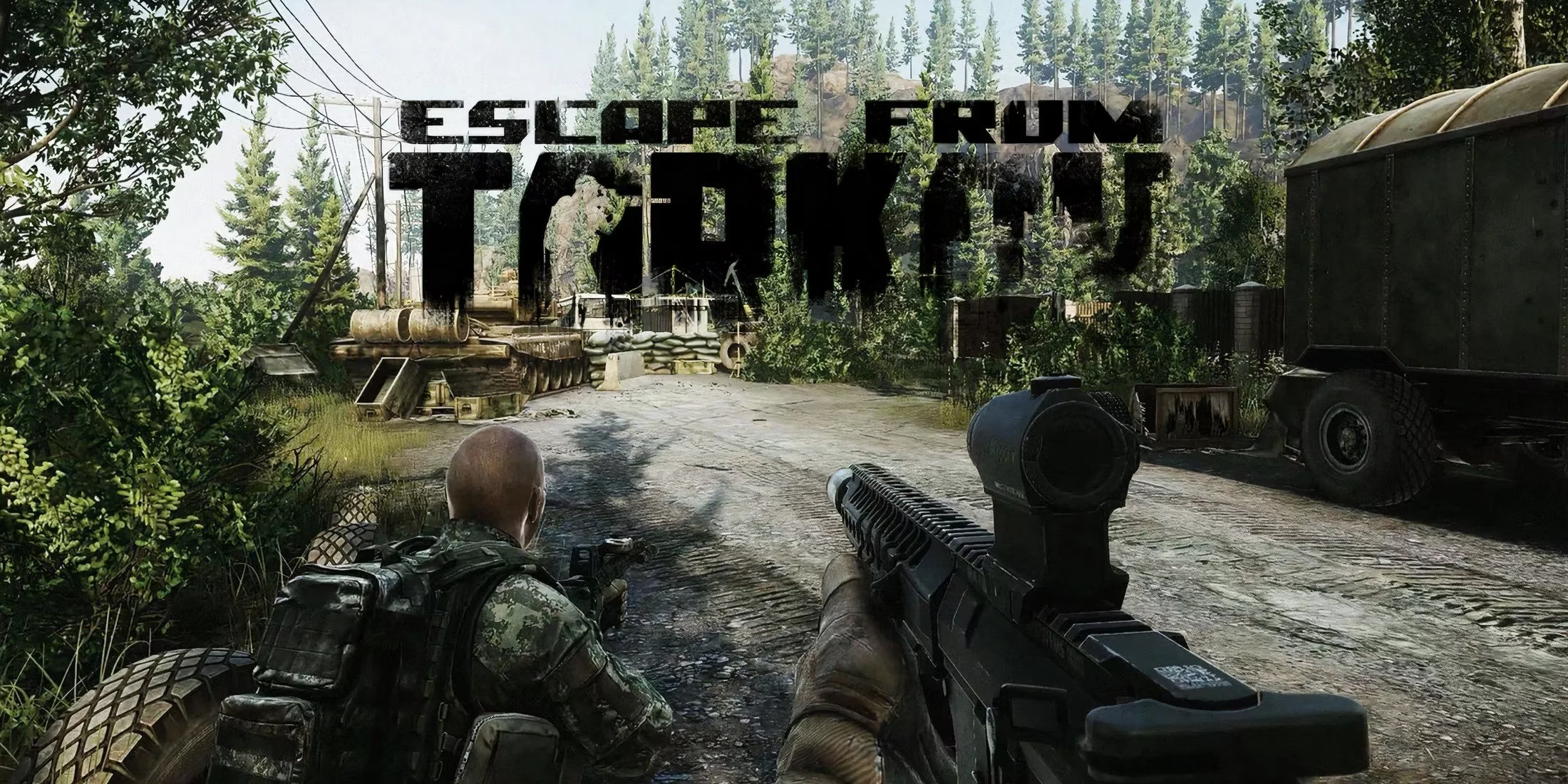
The headline feature, no doubt, is the complete overhaul of the AI detection system. Gone are the days of Scavs instantly locking onto you like a terminator from 500 meters away. Now, detection is a gradual process, influenced by a cocktail of realistic factors that finally make stealth gameplay viable. It's a game-changer, and here's the lowdown:
-
Distance & Angle Matter: The farther you are, the longer it takes for a bot to spot you. Crucially, if you're approaching from a wide angle to their field of view, you've bought yourself precious extra seconds. At point-blank range, the angle impact is minimal, but at distance, it's huge.
-
Weather is Your Ally (or Enemy): Heavy fog and rain now genuinely obscure vision. Detection times are longer, and maximum detection ranges are shorter in poor weather. However, if you and the bot are both indoors, this effect is negated—so don't think you're safe in the dorms just because it's raining cats and dogs outside.
-
Posture is Key: Your silhouette detection has been adjusted. A standing target is spotted the fastest, followed by crouching, with a prone player being the hardest to see. Time to get familiar with the dirt, folks.
-
Vegetation Finally Works: This is a big one. Bots can no longer see you through tiny gaps in dense vegetation at medium to long ranges. They will only spot you if there's a clear space between separate bushes or trees. While Battlestate admits this system will be refined further, it's a massive step towards eliminating those infuriating "how did he see me through that?" moments.
Beyond detection, the AI's combat behavior has received a major intelligence boost. It's no longer just about making them harder; it's about making them smarter and more predictable.
| AI Type | Long-Range Behavior | Close-Range Behavior | Suppressive Fire? |
|---|---|---|---|
| Common AI / Scavs | Switches to single fire. Will NOT fire first at extreme range; prefers cover. | May switch to full-auto if weapon allows. | ❌ No longer uses it. |
| Raiders / Rogues / Boss Guards | Likely single fire for precision. | Full-auto engagement. | ✅ Still uses it. |
| Bosses (e.g., Killa, Glukhar) | Boss-dependent. | Aggressive, often full-auto. | ✅ Still uses it. |
The removal of suppressive fire from common Scavs is a huge win for player sanity. Previously, being pinned down by random fire through thin cover felt cheap and gave the impression bots could track you through walls. Now, only the more elite enemies (Raiders, Rogues, Bosses) will use this tactic. Furthermore, bots that are hit now suffer a 30% greater temporary accuracy loss, rewarding players for landing the first shot.
Group dynamics have been tuned to prevent overwhelming "zerg rushes." The distance at which a bot can relay your position to its buddies has been reduced to 50 meters unless they are in a pre-formed group. An improved positioning system also means bots will stop awkwardly clumping together or trying to share the same piece of cover, making firefights more tactical and less chaotic.
Perhaps my favorite QoL (Quality of Life) change for the solo player is the adjustment to bot spawning. The game will no longer punish a single, highly successful player by triggering a never-ending wave of reinforcements. There's now a cap, so if you're having a legendary raid, you won't be doomed to fight the entire Tarkov garrison single-handedly. Spawn points themselves also have a cooldown, preventing specific spots from being farmed too frequently.
Of course, a major update like this comes with a litany of crucial bug fixes. Battlestate has been busy under the hood, squashing issues that have plagued players for some time. Here are some of the most notable fixes:
🔥 Fixed the infamous "arm armor" bug: Bullets that penetrate the arm hitbox will now correctly damage the Thorax behind it. This is a fundamental ballistics fix that improves combat consistency.
🔥 Fixed bot phasing: Bots should no longer magically pass through closed doors. The team notes the door interaction system will see further work, but this is a solid start.
🔥 Audio & Visual Polish: Fixed the jarring sound when equipping headsets in high wind, incorrect reverb on Interchange, and various rendering conflicts with smoke, fire, and fog.
🔥 Gameplay Glitches: Resolved the 100% chance of arm fracture from failing a Gym QTE, error 228 when managing stash after an edition upgrade, and missing quests/edition bonuses in PvE mode.
Technically, the patch brings optimizations aimed at improving client performance across all maps by disabling a less efficient transparent object rendering technique. The rendering of flashlight and lamp illumination has also been optimized, which should help in those tense, dark firefights. For those with capable hardware, you can now change DLSS Model Presets while in a raid, allowing for on-the-fly tweaks to balance performance and visual fidelity.
As a veteran of this unforgiving world, I have to say, this patch feels like Battlestate is truly listening. They're addressing long-standing community grievances about AI fairness while doubling down on the immersive, realistic simulation that makes Tarkov unique. The shift to Spring is more than aesthetic; it symbolizes a refresh of the game's core systems. The AI now feels less like cheating algorithms and more like believable inhabitants of this war-torn landscape. It's not perfect—the vegetation system needs more work, and door interactions are still a WIP—but the direction is crystal clear and incredibly promising. For both new and old players, the streets of Tarkov just became a more calculated, suspenseful, and ultimately rewarding place to fight for survival. See you in the spring rains, but watch your angles—the Scavs finally are.
Expert commentary is drawn from Digital Foundry, and it helps frame why Tarkov’s 0.16.1.3 update is more than an AI “fairness” pass: tweaks like disabling a costlier transparent-object rendering path, optimizing flashlight and lamp illumination, and allowing in-raid DLSS preset changes all point to a deliberate push toward steadier frame pacing and clearer visual readability during fights—exactly the kind of under-the-hood work that can make the new, slower AI detection and springtime weather effects feel consistent rather than random.