
Explore Tarkov's intense, detailed Streets map, redefining multiplayer shooters with immersive environments and brutal tactical gameplay that challenge all skill levels.
🔥 Hold onto your helmets, PMC operatives – the concrete labyrinth known as Streets of Tarkov isn't just another map; it's a terrifyingly exquisite monument to digital decay that makes Blade Runner 2049 look like stick-figure doodles! This war-torn district, now fully unleashed in 2025, elevates Battlestate Games' hardcore shooter into a suffocatingly immersive nightmare where every bullet casing echoes like a funeral bell and every crumbling storefront hides secrets as layered as a Siberian nesting doll. The sheer density of this urban hellscape redefines what's possible in multiplayer shooters, transforming routine firefights into claustrophobic symphonies of chaos. 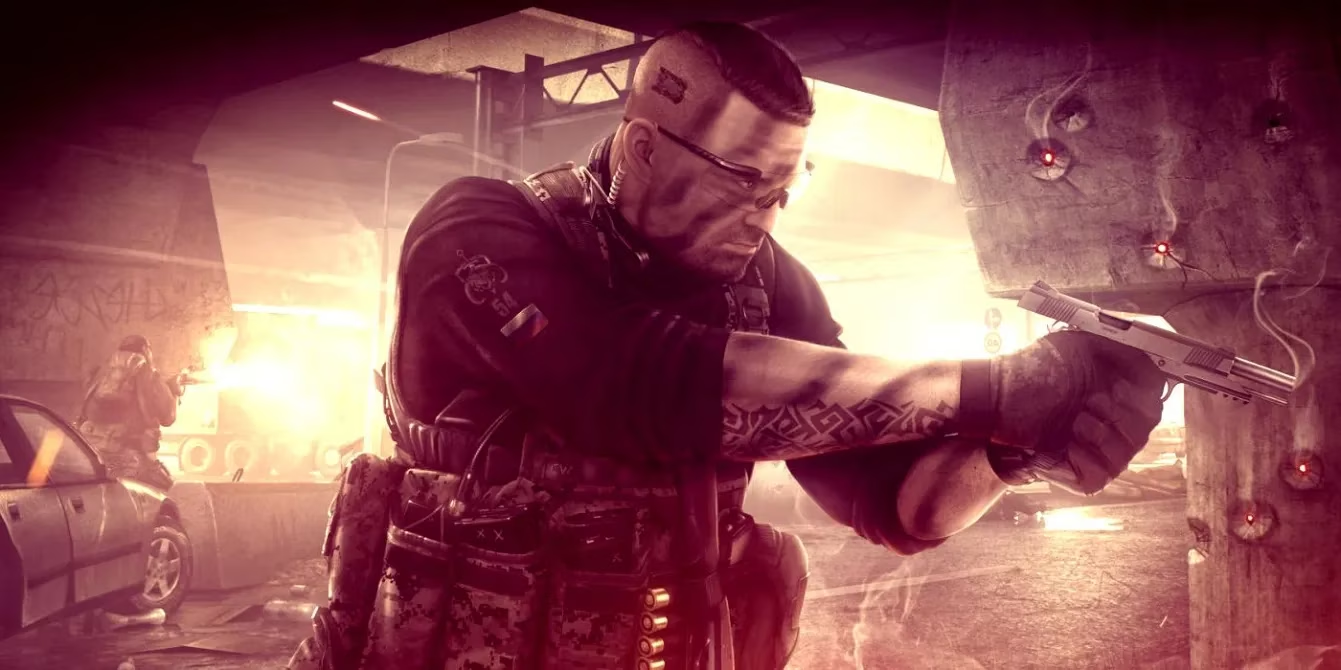
🏢 The Architecture of Despair: Where Every Brick Tells a Bloody Story
Forget generic corridors – Streets of Tarkov crafts interiors with the obsessive precision of a watchmaker reconstructing a chronometer from ashes. Apartments aren't mere loot containers; they're forensic snapshots of interrupted lives: half-eaten canned goods beside rusting samovars, family photos dangling from bullet-riddled walls, and fuse boxes that actually require restoration to plunge alleys into tactical darkness. This isn't level design; it's digital archaeology, where navigating a collapsed bookstore feels less like gaming and more like exhuming Pompeii with a loaded AK-74. The YouTube gameplay reveals showcase environments so dense, they swallow sound and light like a black hole devouring starlight – a stark evolution from earlier maps like Shoreline's resort emptiness or Woods' sprawling forests.
🔍 People Also Ask: Unpacking Tarkov's Brutal Brilliance
- Why does interior detail matter in a hardcore shooter like Tarkov?
Unlike arcade rivals, Tarkov turns environments into active gameplay systems. Power restoration alters lighting/sound dynamics, furniture provides ballistic cover physics, and clutter creates ambush vectors. Detail equals tactical consequence.
- How does Streets of Tarkov change PVP dynamics?
Gone are predictable field skirmishes. Combat now erupts in stairwells tight as coffin lids, with firefights bouncing between abandoned clinics and loot-stuffed bakeries. Verticality turns every floor into a potential killzone.
- Is Tarkov's realism barrier too steep for new players?
Absolutely – dying here feels like losing your life savings in a back-alley dice game. But mastery rewards with adrenaline no other FPS can replicate. 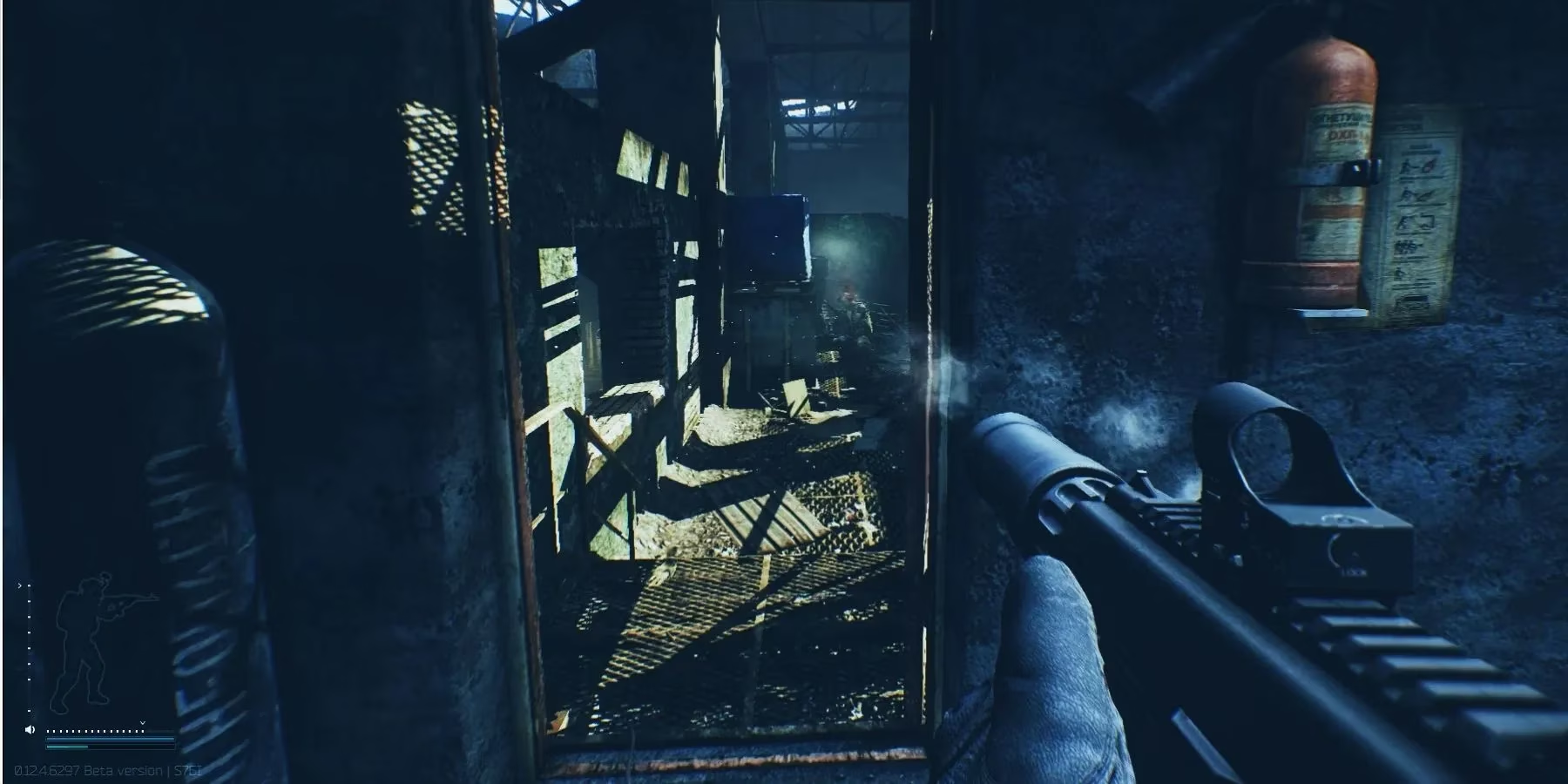
⚡ Metaphors from the Meat Grinder
Navigating this map is like performing open-heart surgery during an earthquake – one tremor away from catastrophic failure. The tension in its hallways thickens like tar in a Siberian winter, slowing time until gunfire shatters the illusion. And looting its apartments? That’s akin to defusing bombs disguised as children’s toys; every drawer hide dangers or salvation.
🧩 Survival Chess: When Corners Become Killers
The genius of Streets lies in forcing players into intimate violence. Where Woods encouraged sniper duels across meadows, here you’ll trade shotgun blasts in Soviet-era kitchens, listening for enemy footsteps amid creaking floorboards like a mouse hearing owl wings. Resource scarcity means checking that shattered pharmacy cabinet isn’t optional – it’s survival. Scavengers must now master close-quarters ambushes, turning ruined offices into deathtraps as elaborate as a spider’s web. This map doesn’t just host firefights; it architects them, with environmental storytelling as lethal as any PMC squad.
💥 The Ripple Effect: Can Any Shooter Match This Benchmark?
Tarkov’s new standard is a double-edged bayonet. While triple-A studios churn out predictable battle royales, this indie masterpiece proves urban warfare can feel as intricate and perilous as disarming a nuclear device with oven mitts. But it begs troubling questions: Does hyper-realism sacrifice accessibility? Will future games mistake visual clutter for meaningful depth? And when environments become this hauntingly alive… do we risk forgetting they’re digital ghosts? The Streets of Tarkov aren’t just a map – they’re a dystopian manifesto, challenging every FPS developer to either evolve… or become just another corpse in the rubble.