
Escape From Tarkov offline mode offers risk-free practice, letting players hone skills and confidence before facing live combat.
I still remember the first time I loaded into Customs as a terrified PMC, clutching an AKS-74U with sweaty palms. The air was thick with dread—every snapped twig felt like a death sentence. In a game where a single bullet can undo hours of preparation, the offline mode became my bunker, a place where I could turn panic into precision without losing everything I owned. By 2026, even after the game’s official 1.0 launch, I treat offline raids like a violinist practicing scales before a concert: tedious, maybe, until you realize every note will be tested under the spotlight of live combat.

My first month online was a massacre. I’d creep through Interchange, deafened by my own heartbeat, only to get head-eyes’d by a player I never saw. Gear I’d scraped together—a Kirasa vest, a scavenged MP5—vanished into the loot pool like coins dropped into a bottomless well. Then a vet on Discord told me about the little checkbox that changed everything: “Enable practice mode for this raid.” At first, I scoffed. Playing Tarkov offline sounded like training for a marathon by jogging in place. But desperation has a way of humbling you.
So I became a ghost in the machine. Here’s how it works: from the main menu, you select Escape From Tarkov as your PMC, choose a map, and tick that box. Diehard purists forget that offline mode strips away only what you ask it to. Other players vanish, but the AI scavengers can remain—and they can be tweaked into anything from harmless puppies to aimbot terminators. That customization turned my offline sessions into a smithy where I tempered my skills. I started on Factory with low-difficulty, low-count scavs, learning to point-fire without jumping out of my chair. Gradually, I dialed the difficulty up, watching bots flank like actual opponents, and it felt like a fencer practicing against an automated opponent that learned my habits.
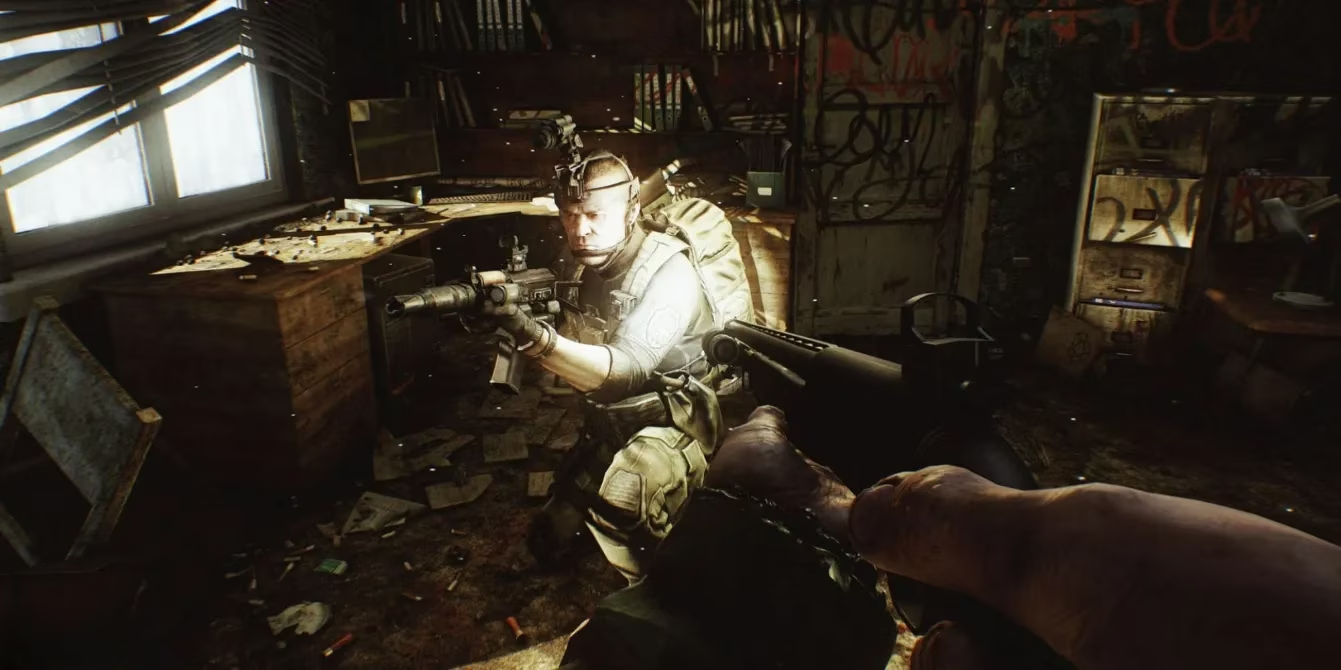
The real magic, though, was the psychological relief. Losing gear in online Tarkov feels like watching someone set fire to your favorite jacket; offline, you’re immune. Nothing you bring in can be extracted, and no loot you find stays with you. Yes, that means the GP coin or the LEDX you just clutched evaporates when the raid ends, but it also means you can walk into a minefield wearing a slick armor and an SR-25 and never flinch. I started testing the kind of aggressive pushes that would bankrupt me online—and dying over and over until my muscle memory felt like a trained hawk that returns despite distractions.
This risk-free environment became my cartographer’s studio. I explored every nook of Lighthouse and Streets of Tarkov, maps that had once been mazes of death, and memorized extracts, loot caches, and flank routes. Offline progress toward skills and experience resets after the raid, but the knowledge is indelible, etched into my brain like a tattoo. By early 2026, with the game’s new recoil system and updated audio blocking cues, I could navigate D2 on Reserve blindfolded, all because I’d drilled it offline until the darkness felt familiar.
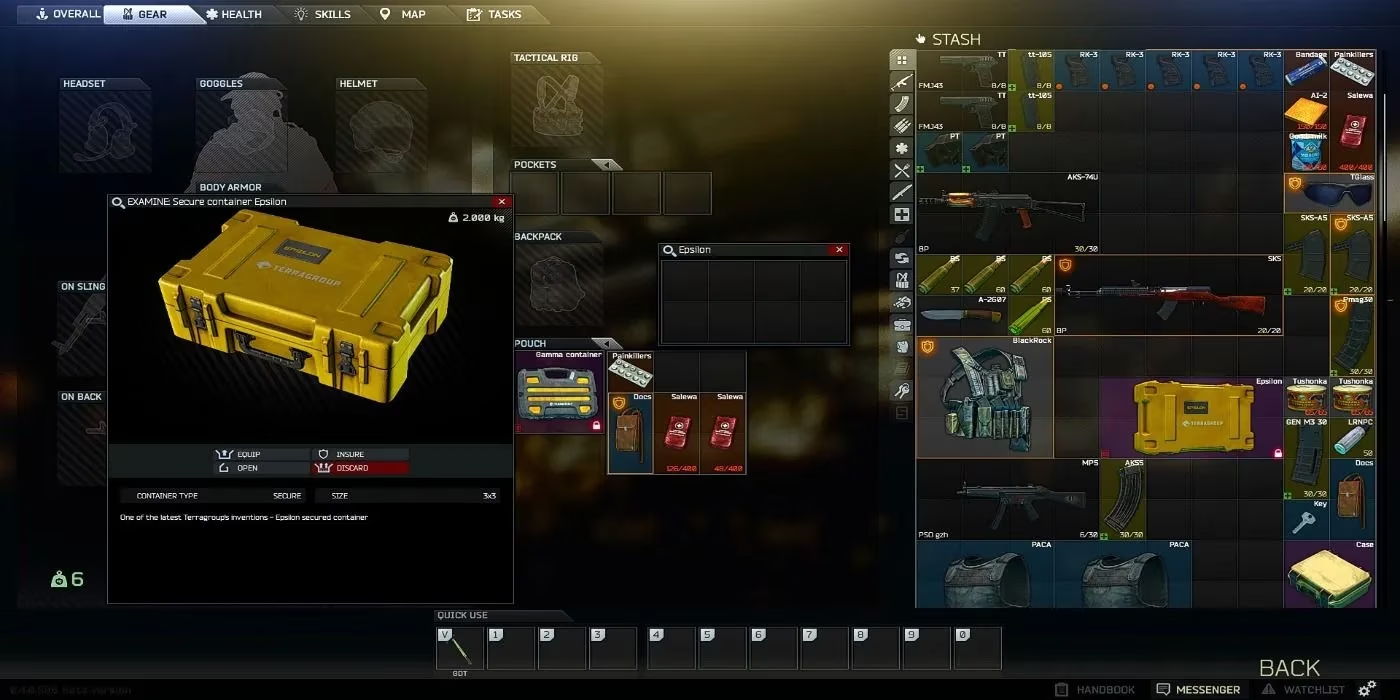
Now, when I drop into a live raid, the old terror is replaced by a cold focus. I understand that offline mode is a crucible where the only thing forged is you. You can’t keep the dog tag of that raider boss, you can’t bank roubles, and you can’t level your endurance past the exit screen. But you can learn how a DVL-10 feels at 300 meters, or how a broken leg changes your rotation speed—lessons that transfer directly when a real opponent is hunting you. Cheaters still plague online play even in 2026, but when I need a pure, untainted Tarkov experience, I know exactly where to go. I tick that box, and for 40 minutes, the war belongs only to me.