
Destiny players and shooter fans weigh in on Marathon, the extraction shooter aiming to rival Escape from Tarkov, but its impact feels muted.
Let's be honest, as a Destiny player, I've watched the whole Marathon saga unfold with a weird mix of hope and apprehension. It's 2026 now, and while the initial launch hype has settled into a quiet hum, the conversation hasn't really changed. Sure, everyone wants Bungie to succeed—a win for Marathon is a win for the studio that gave us so many hours of Destiny. But that doesn't mean we have to pretend Marathon is the next big thing. Having played it extensively since release, watched countless streams, and talked to shooter fans from all corners, the overwhelming feeling remains one of polite indifference. It's... fine. It can be fun. But is it the genre-defining hit that pulls people away from their mainstays? From everything we've seen and played up to now, the answer is a resounding 'No.'
The Extraction Shooter Landscape in 2026
It feels like the gaming world got a collective case of extraction shooter fatigue before the genre even had a chance to properly stretch its legs. Maybe we're just tired of the endless trend-chasing cycle. Remember when everything had to be a MOBA, then a hero shooter, followed by the battle royale avalanche? We've been there, done that. The extraction shooter 'boom' now feels less like a boom and more like a tentative spark, one that seems to have fizzled out rather than ignited. And Marathon's position in all this? It's like showing up to a party that everyone decided to leave an hour ago.
The Unrivaled King: Escape from Tarkov
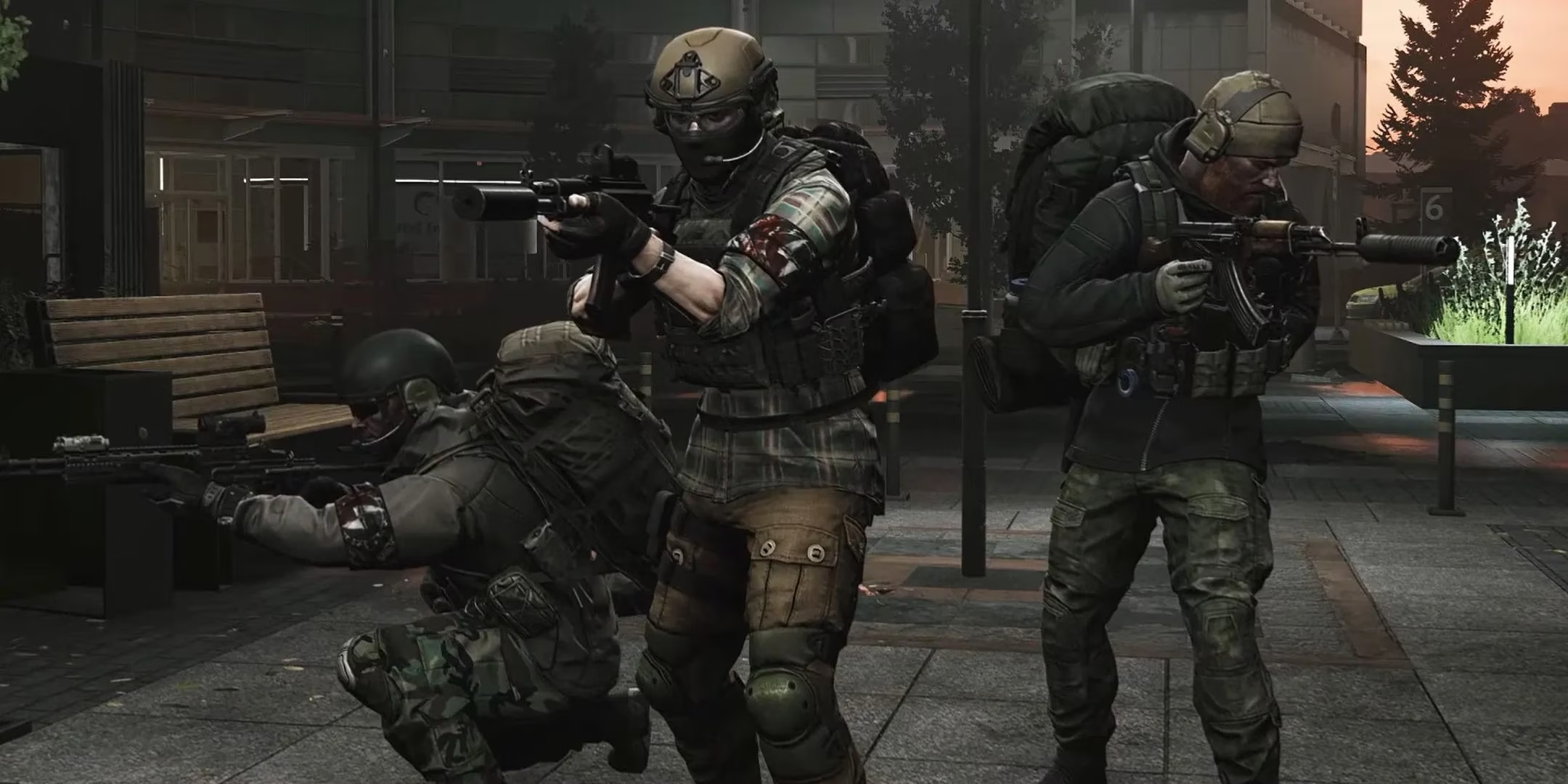
To understand why Marathon feels so... weightless, you absolutely must understand the genre's titan: Escape from Tarkov. In 2026, Tarkov isn't just a game; it's a lifestyle, a second job, and a brutal test of will all rolled into one. It is, and I say this with a strange mix of reverence and horror, an absolute nightmare. It’s the Fortnite of this genre—the impossible standard. Trying to compete with Tarkov head-on is like trying to out-brutalize a bear; it's a fool's errand.
Tarkov’s complexity isn't an accident; it's the entire point. Let’s talk ammo. If you think a shooter with 30 ammo types is overkill, buckle up. Escape from Tarkov has 185 distinct types. Each one has its own labyrinth of stats—penetration, armor damage, recoil, tracer effects—making your choice more consequential than most decisions in hardcore RPGs. The game is so hostile it doesn't even provide an in-game map. You navigate using a compass and fan-made maps on a second screen, like a medieval explorer with a Wi-Fi password. They say it takes a thousand hours just to be bad at Tarkov. It’s a game that treats player comfort like a weakness to be exploited, and its fans wouldn't have it any other way. For them, it’s not just a game; it’s a digital crucible, and surviving a raid feels like a genuine, hard-won achievement.
Marathon: The Approachable Alternative
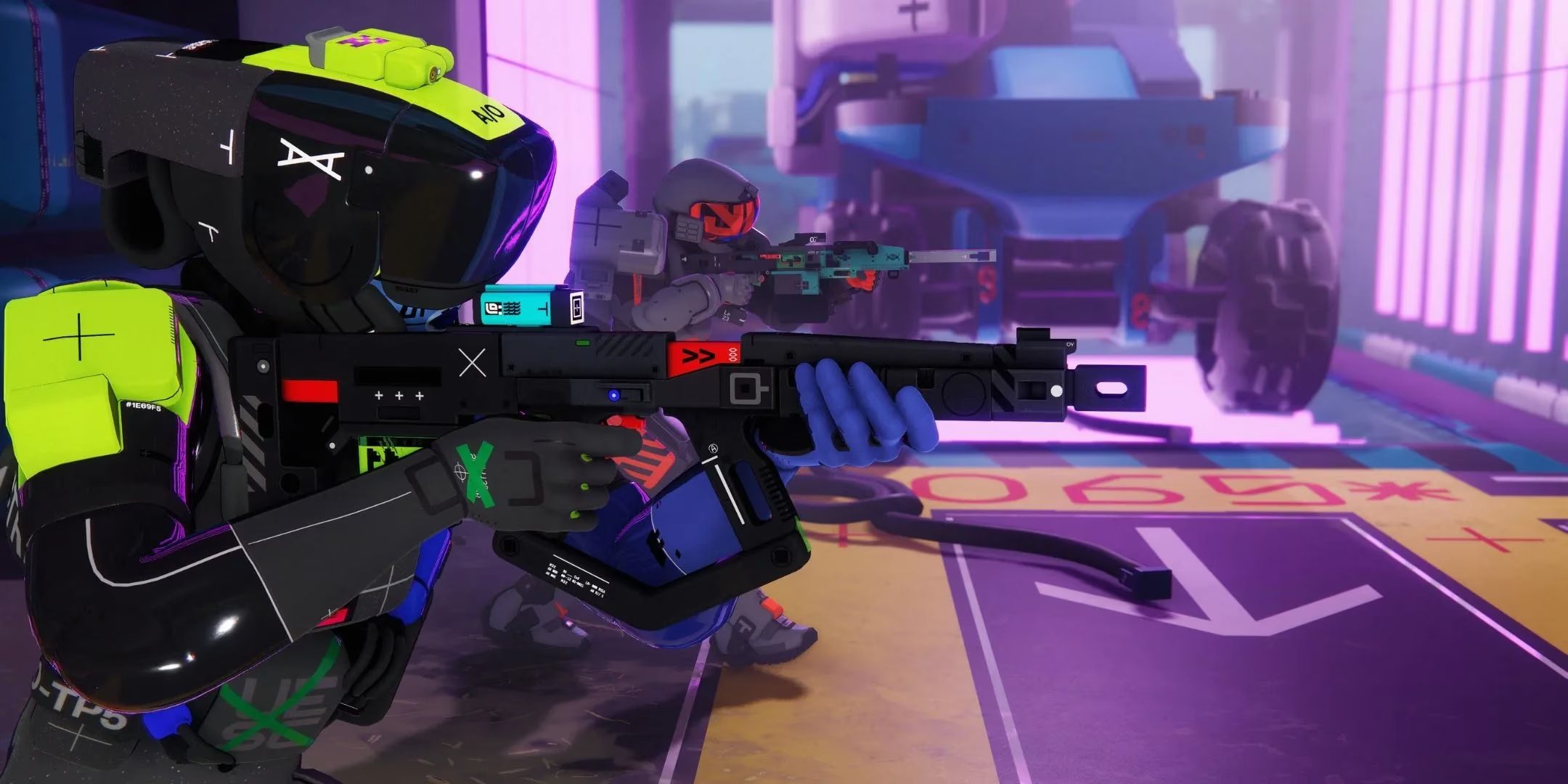
So, what did Bungie do? They looked at Tarkov's imposing, jagged mountain and decided to build a gently sloping hill next to it. The stated goal for Marathon was always to attract newcomers, to be the friendly face in a room full of scowls. In many ways, this felt like a direct response to the criticism that Destiny 2 had become an impenetrable fortress for new players. Bungie wanted to avoid those mistakes.
And on paper, they succeeded. Marathon is accessible. The UI is clean, the objectives are clear, the moment-to-moment gunplay is satisfyingly Bungie-esque. Getting into a match is easy, and you won't need a PhD in ballistics to understand your loadout.
The Core Problem: Depth vs. Width
But here's the rub, the trap that so many developers fall into: a game made for everyone is often a game made for no one. In its noble pursuit of approachability, Marathon sanded down all the interesting edges. Tarkov's complexity is its soul; Marathon's simplicity is its hollow core.
Let me put it this way: Tarkov is a dense, ancient forest, full of danger, mystery, and hidden paths that take years to learn. Marathon, by comparison, is a well-manicured park. It's pleasant for a stroll, but there are no secrets to uncover, no real fear of getting lost. You know every path, and every encounter feels predictable.
The thrill of an extraction shooter—the heart-pounding tension of sneaking towards an exit with precious loot, the risk/reward calculus of every engagement—is dulled in Marathon. The stakes feel artificial, like playing poker with candy instead of money. The lack of deep systems and punishing consequences means that a successful extraction doesn't deliver that massive dopamine hit; it just feels like the expected conclusion to a 15-minute session.
The Verdict in 2026
So where does that leave us? Marathon isn't a bad game. It's a competently made shooter with Bungie's signature polish on the action. But in the ecosystem of 2026, competence isn't enough. It tried to be an extraction shooter for people who don't like extraction shooters, and in doing so, it failed to give anyone a real reason to love it. Tarkov players will scream its praises or curse its name with equal passion. Marathon? It exists in an awkward silence, a polite nod from the gaming community.
It's the gaming equivalent of a perfectly serviceable hotel room—clean, functional, but utterly forgettable the moment you check out. Or perhaps more accurately, it's like a streamlined fast-food version of a gourmet meal; it fills a need quickly, but you're never left savoring the experience or craving more.
Bungie aimed for the middle, and in 2026, the middle ground in live-service gaming is a very lonely place. Marathon may have avoided the boos, but in its desperate attempt to not offend, it forgot how to earn any cheers.