
xxx
Hey folks, it's your friendly neighborhood hardcore gamer here, back at it again with another deep dive into the wild world of Escape from Tarkov. So, it's 2026, and guess what's still making headlines? Cheaters. Yep, that age-old plague of competitive gaming. But Battlestate Games, the devs behind this punishingly complex extraction shooter, just dropped a new tactic that's got the whole community buzzing. They're not just banning cheaters anymore; they're putting them on blast. A public Google Docs spreadsheet with names? Now that's... something. But is this a real solution, or just a flashy PR move? Let's unpack this, shall we?
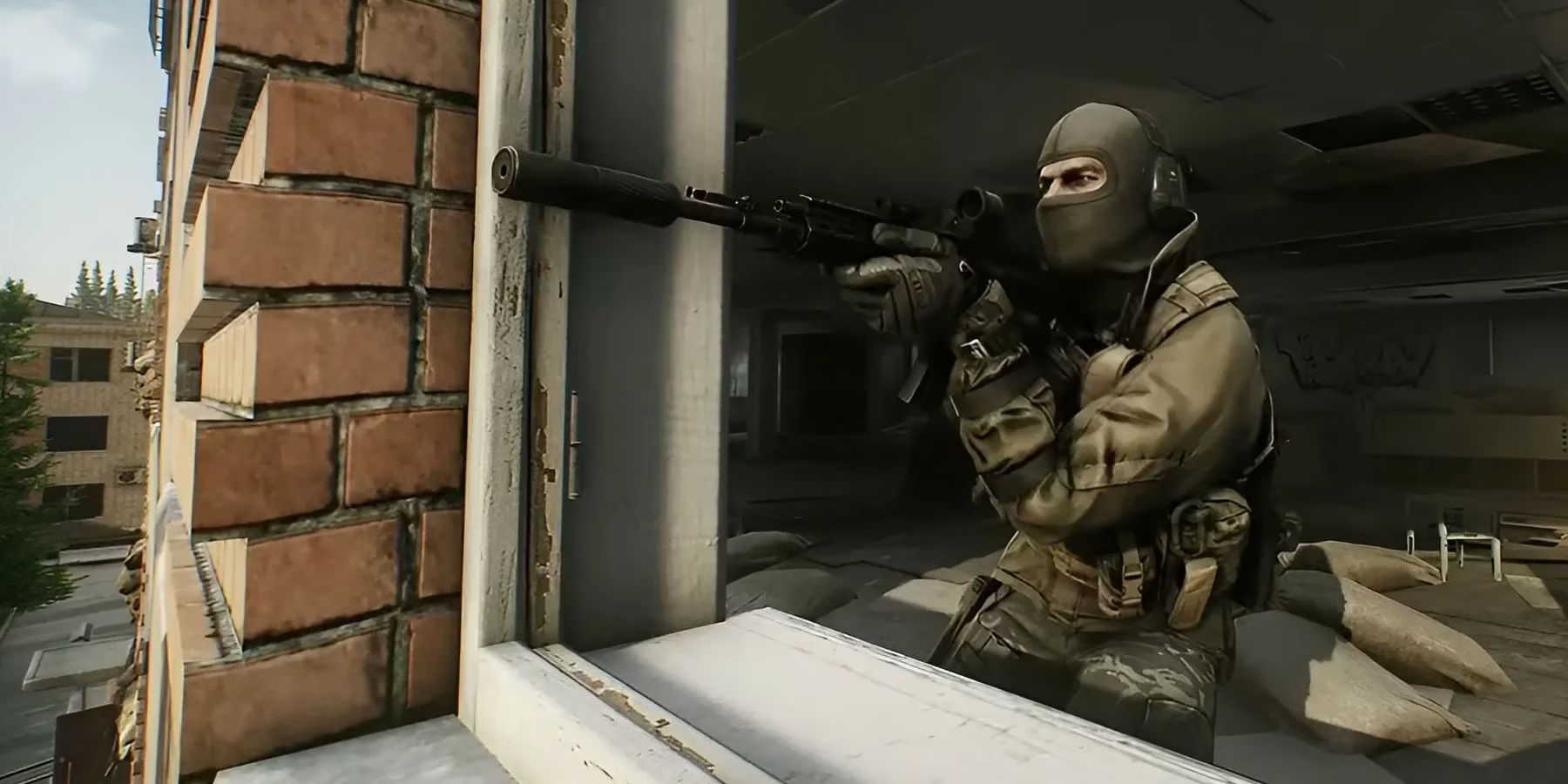
The Core Problem: Why Tarkov is a Cheater's Paradise
First things first, why is cheating such a massive issue in Tarkov compared to other shooters? It's not just about aimbots and wallhacks. It's baked into the game's very DNA. Think about it:
-
The Stakes Are Insanely High: Every raid is a high-risk, high-reward scenario. Die, and you lose everything on your character—your precious gear, your hard-earned loot, your progression. This "permadeath-lite" system creates a tremendous incentive to win at all costs.
-
The Technical Side is... Janky: Let's be real, the netcode has had its issues. Combined with the game's reliance on modifiable
.jsonfiles (a known vulnerability), it creates openings that cheaters can exploit way more easily than in a tightly locked-down game like, say, Valorant. -
The Investigation That Shook Everyone: Remember that unofficial investigation a few years back that claimed a staggering 60% of matches had a cheater in them? Whether that exact number was gospel or not, it highlighted a truth the community already felt in their bones: cheating wasn't just occasional; it was endemic.
So, when the game's CEO, Nikita Buyanov, came out saying they ban "thousands" daily, a lot of players just... didn't buy it. The scale of the problem felt too big for that claim to ring true. The trust was already wearing thin.
The "Name and Shame" Strategy: What's Actually in the Spreadsheet?
Fast forward to now. Battlestate's big idea? Public humiliation. They've released a public Google Doc listing the in-game names of detected cheaters. On paper, it sounds like a power move. Transparency! Accountability! Shame! But when the community opened that doc... well, the reaction was less than enthusiastic.
Here’s what people found (or didn't find):
| What We Got | What Was Missing |
|---|---|
| A list of usernames. | Any context about what they did. (Was it a radar hack? An aimbot? A speed hack?) |
| A promise of action. | Dates of the ban, evidence, or the cheat detection method used. |
| A public record. | Information on whether these are new bans or old ones being republished. |
Many players looked at this sparse list and saw it for what it likely is: "posturing and theatrics." It feels like a low-effort way to say "Look, we're doing something!" without actually addressing the underlying, systemic issues that make cheating so prevalent and profitable in Tarkov. Is shaming a few names really a deterrent when the game's core design and technical framework still offer such rich rewards for cheating? I have my doubts.
Why Do We Still Play? The Unshakable Allure of Tarkov
This begs the question: if cheating is (or was) so bad, why does Tarkov still have a dedicated, passionate player base in 2026? Simple: there's still nothing else like it.
-
Depth & Complexity: The weapon modding, the intricate ballistics, the deep medical system, the economy—it's a gameplay loop that's incredibly satisfying to master.
-
Failed "Alternatives": Remember when Call of Duty's DMZ mode was supposed to be the "Tarkov-lite" alternative? It ended up being a completely different, much more casual experience. It couldn't touch the tension, the stakes, or the sheer depth of Tarkov.
-
The Cheater's Paradox: Ironically, the very features that make Tarkov so amazing—the high stakes, the loot-driven gameplay—are what make it so attractive to cheaters. They want that power fantasy and that easy profit, corrupting the experience for everyone else.
So, we're stuck in this cycle. We love the game Battlestate built, but we're constantly frustrated by the ecosystem they've struggled to police.
Looking Ahead: Is This Enough?
Let's be real: a public shaming list is a start, but it's a band-aid on a bullet wound. For the community to truly regain faith, we need to see more. We need:
-
Robust, Transparent Anti-Cheat: Not just claims, but detailed reports. What new systems are in place? How are they tackling the
.jsonvulnerability? -
Hardware & Phone Number Bans: Go beyond the account. Make it costly and difficult for cheaters to just hop back in with a new profile.
-
In-Game Culture Shifts: Could there be systems that incentivize fair play more? Better in-game reporting with feedback?
The ball is in Battlestate's court. The spreadsheet stunt shows they know cheating is a PR nightmare. But turning that awareness into meaningful, technical action is the real challenge. In 2026, players are smarter and more demanding than ever. We can tell the difference between a genuine fight against cheaters and a performance meant to placate us.
For now, we keep our eyes on the horizon. Games like Dark and Darker (despite its own legal battles) showed there's a hunger for this genre. Maybe true competition will force the innovation Tarkov needs. Until then, we load into another raid, hoping that the rustle in the bushes is just a scav and not another player who can see through walls. Stay vigilant out there, PMCs. ✊