
PvPvE games like Hood: Outlaws and Legends and Hunt: Showdown deliver high-stakes chaos blending human rivals and AI threats for unforgettable matches.
Multiplayer gaming has long been divided into two tidy camps: player versus environment (PvE), where squads face down AI hordes, and player versus player (PvP), where skill against other humans is the ultimate test. But a deliciously chaotic third way has been stealing the spotlight, especially since the early 2020s. The PvPvE hybrid tosses both human enemies and AI threats into the same pot, forcing players to keep their heads on a swivel. Back in 2021, Sumo Digital dropped Hood: Outlaws and Legends, a medieval heist romp that crystallized the genre’s appeal, and even now in 2026 its DNA can be felt in countless lobby brawls and extraction shooters. The magic of PvPvE is that a match never follows a script — you might be locked in a tense firefight with a rival crew only to have a monster smash through the wall and change everyone’s plans.
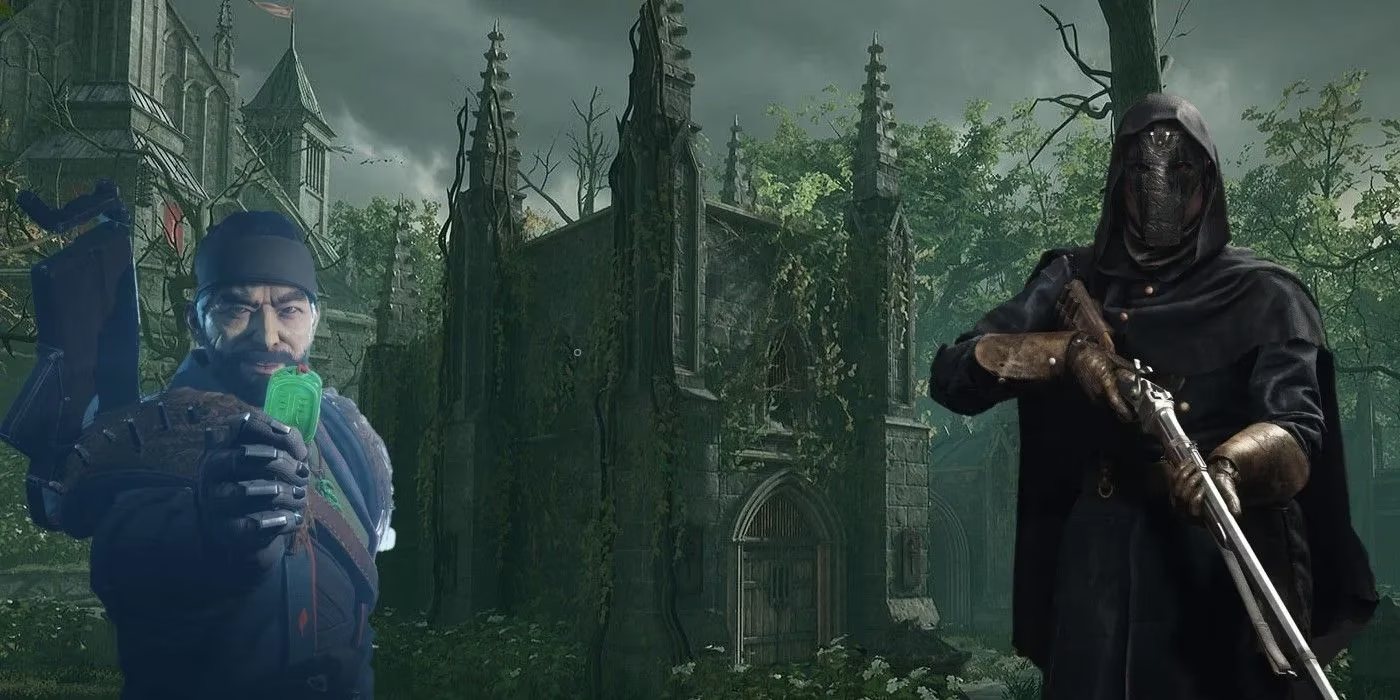
Hood: Outlaws and Legends built its entire identity around two teams competing to pull off the perfect heist while the State’s guards and the terrifying Sheriff patrolled the map. The PvPvE gameplay loop is devilishly simple: snatch the key from the Sheriff, crack the vault, and make off with the treasure. But here’s the kicker – stealing the key and opening the vault only needs to happen once, and it’s often smarter to let the enemy team do the heavy lifting before you swoop in, wipe them, and claim the prize. When the vault swings open, the Sheriff becomes a one-hit-killing juggernaut that can’t be permanently put down, only briefly stunned. That turned ordinary AI guards into accidental allies for whichever side wasn’t currently clutching the loot. Progression was flavored with a Robin Hood twist: winners divided the spoils via the Scales of Justice, choosing how much to line their own pockets and how much to give to the poor. The whole experience was a masterclass in controlling chaos, where a well-timed assassination could flip the match on its head. Even five years later, Hood stands as a benchmark for how PvPvE can craft memorable, water-cooler moments.
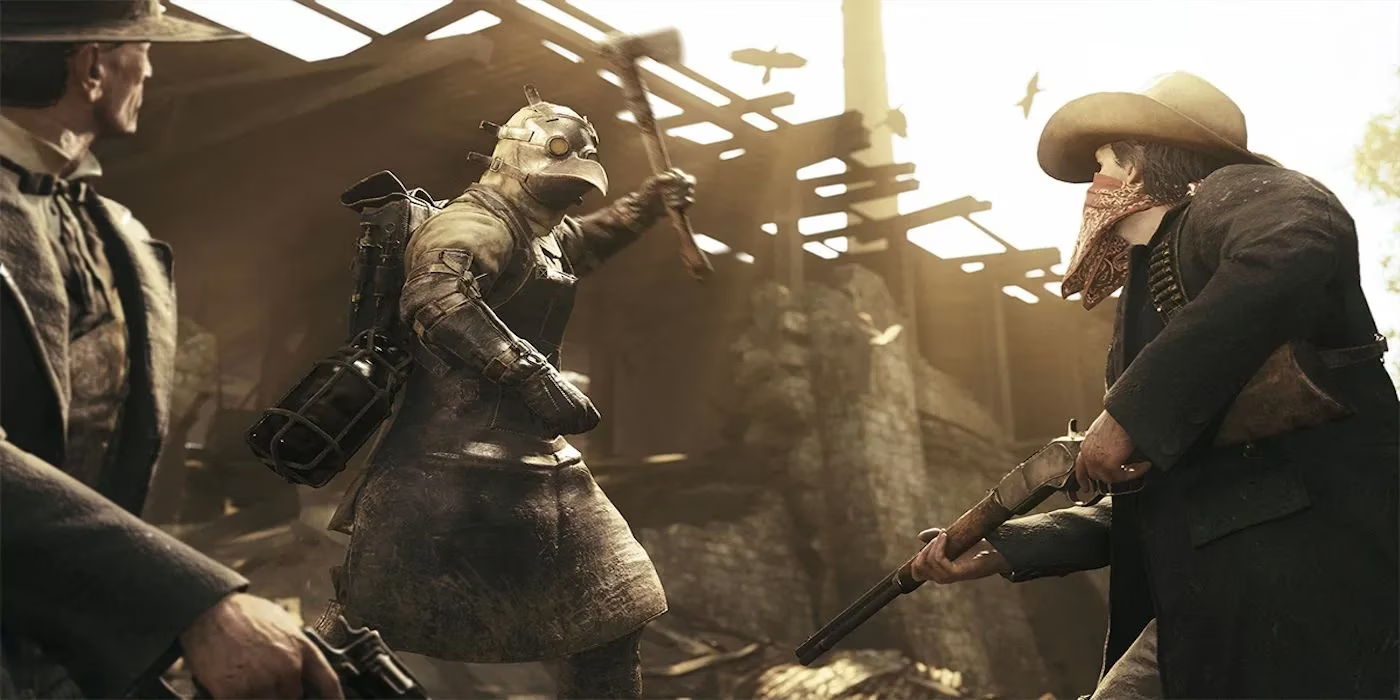
Long before Hood prowled its way onto consoles, Hunt: Showdown had already carved out a cult following with its gritty, unforgiving take on the formula. In Hunt, players step into the boots of bounty hunters tracking nightmarish creatures through the Louisiana bayou. The signature Bounty Hunt mode pits up to 12 players against each other and a boss monster that’s no slouch. Once a team downs the boss and starts the banishment, every other hunter on the map zeroes in on their location, creating a nerve-shredding siege. Death carries real weight — lose your hunter and you kiss goodbye to all the gear and experience you brought in. This permadeath-like sting makes every scoped rifle and brass-knuckle brawl feel like a high-stakes gamble. The PvE element isn’t just cannon fodder; it’s the catalyst that forces players into the same kill zone, ensuring that PvP clashes erupt like clockwork. Hunt: Showdown’s ambiance and sound design still give me the heebie-jeebies in 2026, and its influence on later extraction shooters is undeniable.
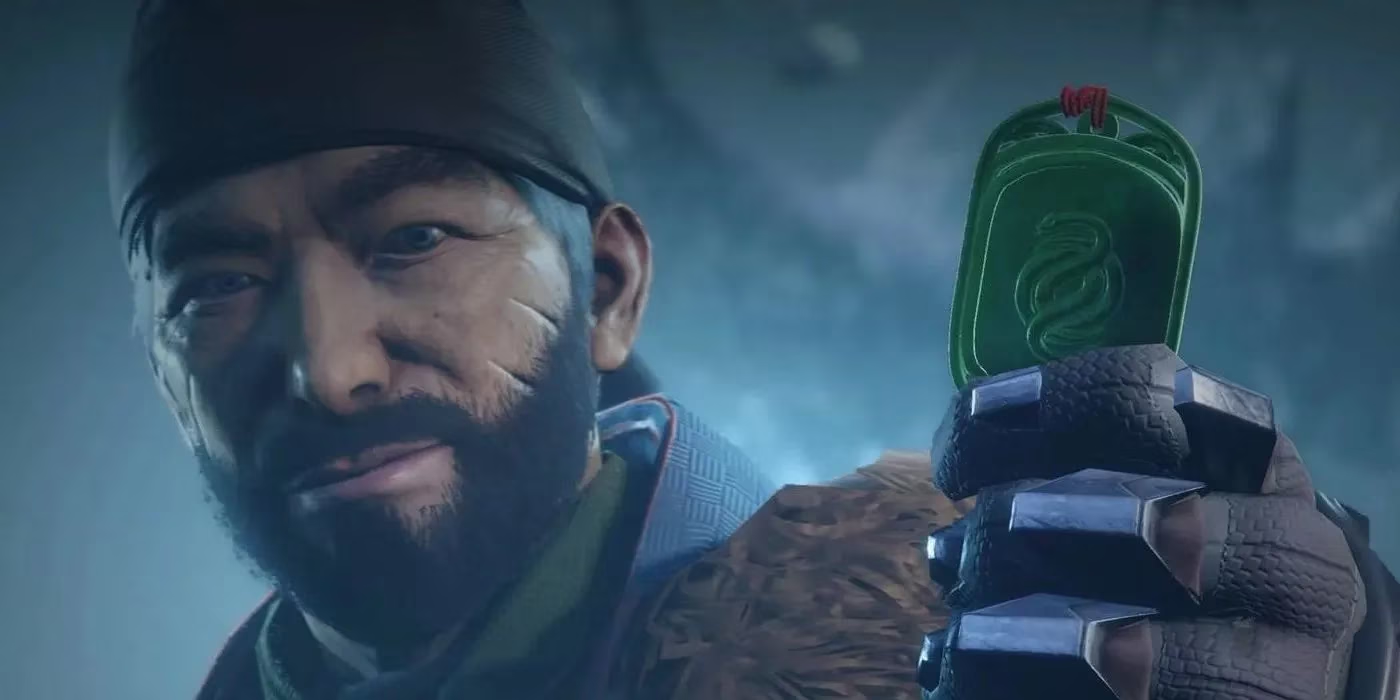
Another heavyweight that helped push PvPvE into the mainstream is Destiny 2’s Gambit mode, introduced with the Forsaken expansion. Gambit pits two teams of four Guardians in separate arenas racing to slay waves of AI enemies and collect glowing Motes. Banking those Motes hits the enemy team with blockers and, once 100 are stashed, summons a Primeval boss that must be melted before the other side does the same. The real sauce, though, is the invasion mechanic. After banking 25 motes, one player can portal over to the opposing arena as a red specter, packing buffs that make them a walking nightmare. Every kill the invader scores heals the enemy Primeval, turning a quick win into a desperate slog. Mote management keeps the heat on: die and your motes drop, and if blockers are on your bank, you can’t deposit until they’re cleared. Rank progression through the Infamy system rewards dedicated players with engrams and the chance to reset for even shinier loot, making each match a step toward glory.
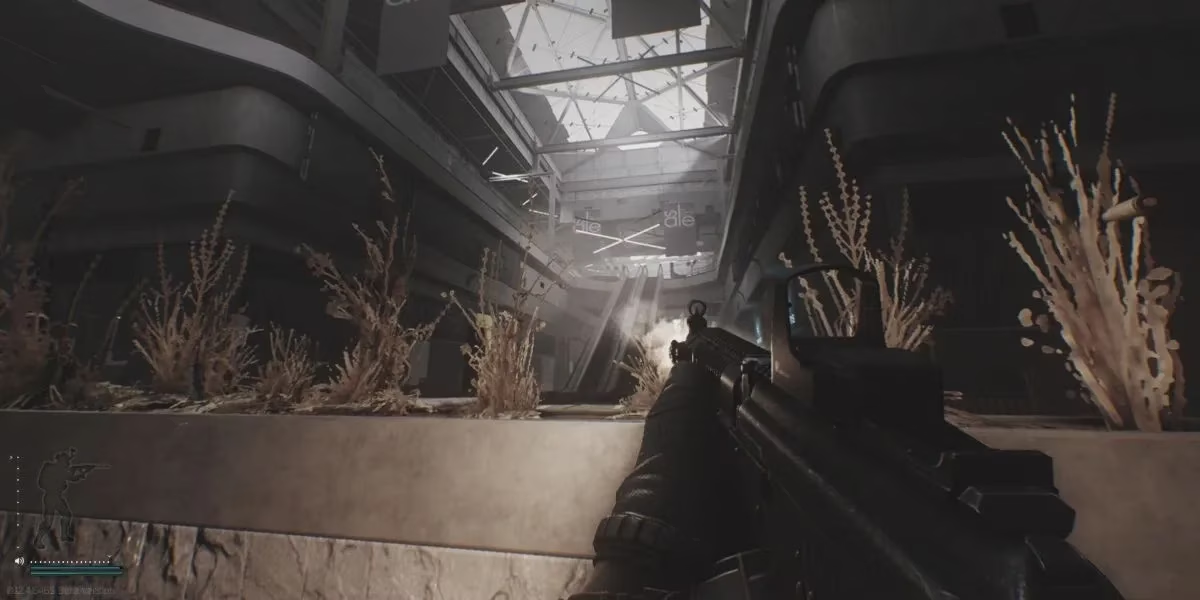
The PvPvE spirit isn’t confined to these three titles. Escape from Tarkov cranks the tension to eleven with its extraction-based raids, where AI Scavs roam the map but the true danger always comes from other players. A single raid can swing from a quiet loot run to a heart-pounding multi-squad firefight in seconds. Meanwhile, DayZ strands survivors in a zombie-infested wasteland where water and bandages matter as much as bullets, and the only thing scarier than a horde of infected is a stranger who’s just run out of beans. Ark: Survival Evolved layers dinosaur taming and tribe warfare on top of its hostile ecosystems, making alliances as fragile as a thatch hut. These games all understand that the juiciest stories — the ones you can’t wait to tell your buddies on Discord — come from the friction between human creativity and AI unpredictability.
As of 2026, the PvPvE design philosophy is far from a flash in the pan. New releases continue to riff on extraction mechanics and hybrid arenas, ensuring that players never quite know what’s around the next corner. Whether you’re a lone wolf or a team player, the appeal is primal: it’s the thrill of outsmarting both the game’s systems and the unpredictable genius of other humans. In a world saturated with battle royales and linear co-op, PvPvE remains the rowdy, nail-biting underdog that keeps multiplayer gaming fresh.