
Hardcore wipe and boss spawn rate changes in Escape from Tarkov redefine survival and progression, shaping a thrilling Norvinsk experience.
The winds of change in Norvinsk are fickle, laced with the scent of cordite and damp earth. What began as an unyielding decree from the shadowy powers of Battlestate Games has softened, its ironclad promise now tempered by the weary sighs of the survivors. The hardcore wipe, a cataclysm that reshaped the blasted landscape of Tarkov, has been subtly rewritten. No longer is the terrifying presence of bosses an absolute certainty, a guaranteed specter haunting every raid. That formidable 100% spawn rate, a pillar of the initial, brutal vision, has been chiseled down to 70%. This is not a retreat from the hardcore ethos, but rather a recalibration of its rhythm—a concession to the grinding reality of survival in a world where every bullet is precious, and every step could be the last.
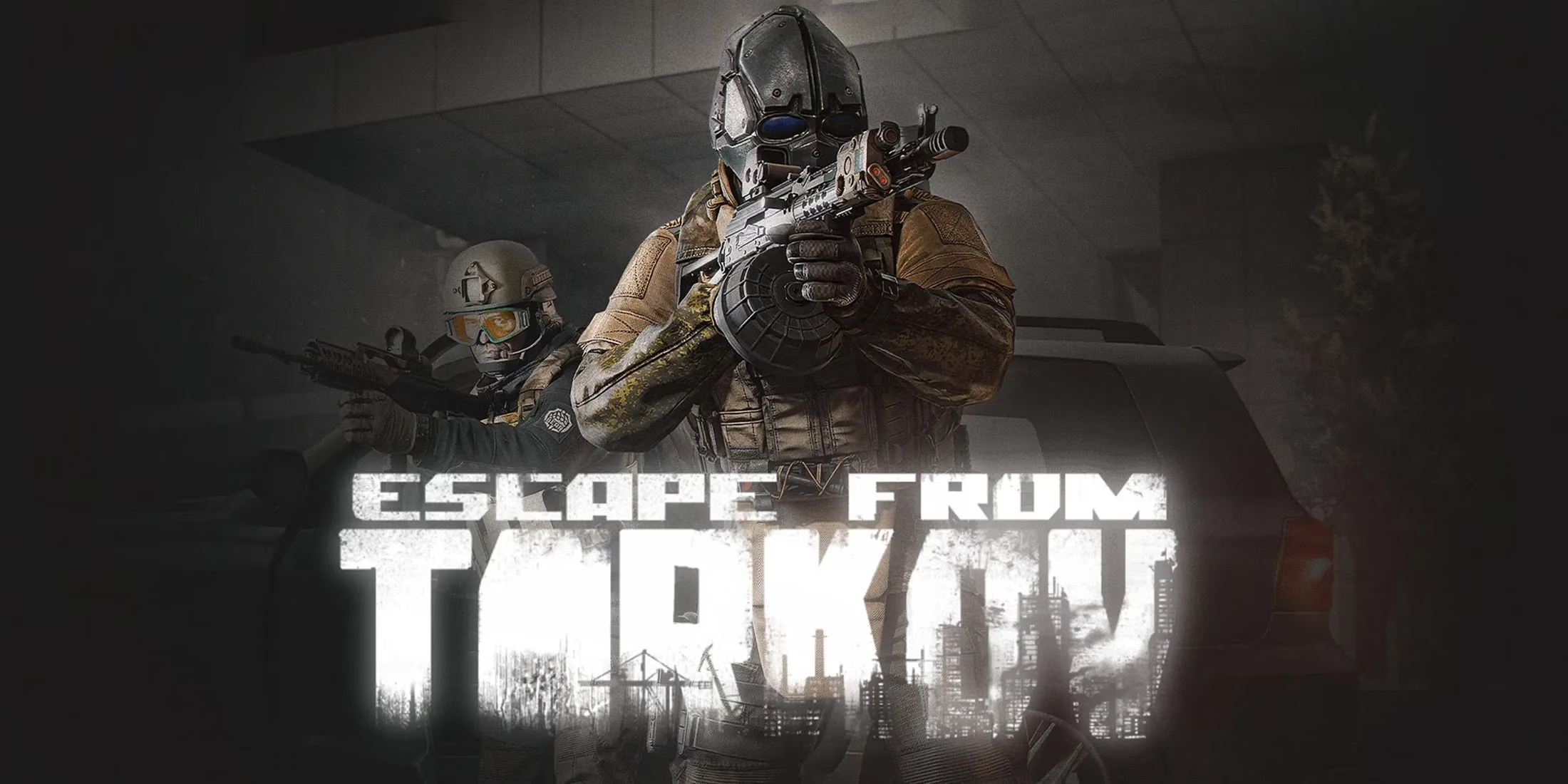
The initial incarnation of the hardcore wipe was a symphony of pure, unadulterated pressure. It arrived with the 0.16.8.0 patch in July 2025, a true progression reset that stripped even the most seasoned operators back to their bare essentials. Its most defining feature was the absolute guarantee of boss encounters. For the lone wolf, the solo scavenger picking through the skeletal remains of the city, this meant every foray was a potential dance with death. The map was no longer a place to cautiously loot; it was a gauntlet where the roar of a boss's minigun could erupt from any shadowed corner. Yet, for the well-oiled squads, the veterans who communicate in terse whispers and covering fire, this guarantee was a golden ticket. It became a predictable, if perilous, farming circuit. The high-tier loot that once took weeks to secure could be concentrated into days of coordinated, high-risk assaults.
This dichotomy created a chasm in the player base. The community's reaction was a study in polarized extremes. On one side stood those who reveled in the sheer, unforgiving challenge, viewing the guaranteed bosses as the ultimate test of skill and nerve. On the other were those who felt the game's already steep progression curve had become a vertical cliff face. The wipe had taken everything; now, rebuilding felt impossibly slow, bottlenecked by encounters designed for teams.
💀 The Hardcore Dichotomy: A Tale of Two Playstyles
| Playstyle | Under 100% Boss Spawns | Under 70% Boss Spawns |
|---|---|---|
| Solo Operative | Constant, high-stakes evasion; survival prioritized over engagement. | Breathing room returns; looting routes become viable again. |
| Coordinated Squad | Predictable, efficient loot farming; accelerated progression. | Increased raid-to-raid uncertainty; treasure hunting becomes a gamble. |
| Overall Pace | Frenetic, high-intensity, and punishingly fast for geared players. | Deliberate, more variable, with a lengthened progression arc. |
Thus, the adjustment on July 12th was inevitable. Reducing the boss spawn chance by a full 30% is not merely a numerical tweak; it is a philosophical shift. Battlestate Games listened to the chorus of strained nerves and implemented a change that fundamentally alters the raid calculus. The world of Tarkov feels less like a predetermined script of violence and more like the unpredictable, treacherous place it was always meant to be. Will the cultists be chanting in the Customs dormitories today? Or will the halls be eerily silent, save for the scuttling of another player-scav? This reintroduced uncertainty is the soul of the extraction genre.
Yet, for every sigh of relief, there is a grunt of frustration. Those squads who had perfected their farming rotations in the first few days of the wipe now sit on stockpiles of gear, their early advantage solidified by the very guarantee that has now vanished. Newer players or those who missed the initial window find themselves chasing a receding horizon, the path to powerful gear now longer and more random. The grind, true to the hardcore name, has become grindier for everyone. Progression is no longer a sprint that only the most coordinated can win; it is now a marathon with more hidden pitfalls.
🌲 In a parallel, more welcoming move, the developers also reintegrated the entirety of Tarkov's playground. The sprawling, sniper-haunted Woods map was added back into the raid rotation on that same fateful July 12th, swiftly followed by the restoration of all locations for player selection. This re-opening of space provides a crucial counterbalance to the tightened boss economy. It gives players more room to breathe, to pursue alternative objectives, and to engage in the quiet, tense gameplay of exploration and scavenging that forms the other half of Tarkov's heart.
Looking forward, the horizon is deceptively calm. Battlestate has framed this hardcore wipe and its subsequent adjustments as the final major upheaval before the mythical 1.0 launch. The promised land of a full release is slated for the latter half of 2025, with whispers and roadmap clues pointing toward an autumn arrival, perhaps around September. This period of tuning and recalibration, therefore, feels profoundly significant. It is the last great experiment, the final tempering of the blade before it is presented as a finished weapon.
The reduced boss spawn rate is not a dilution of Tarkov's vision, but a refinement. It replaces absolute tyranny with calculated menace. It asks players to prepare for the worst but hope for a fleeting moment of peace. The hardcore wipe remains, its scars fresh on every player's inventory. But its rhythm has changed. The beat of danger is still ever-present, but now it syncopates, it hesitates, it leaves spaces of quiet dread that are, in their own way, just as terrifying as the certainty of a firefight. In Tarkov, it seems, the unknown is often more harrowing than the known enemy. The game continues its slow, painful march toward 1.0, a journey as unforgiving and rewarding as a midnight extraction through a hail of gunfire.