
Warzone DMZ vs Escape From Tarkov: tactical extraction shooter showdown between frantic objective-looting and slow-burn stealth survival.
As the gaming landscape continues to evolve in 2026, the tactical extraction shooter genre has cemented its place as a fan-favorite, with two titles often dominating the conversation: Call of Duty: Warzone’s DMZ mode and the hardcore PC classic Escape From Tarkov. These games, while sharing core concepts like high-stakes looting and extraction, offer vastly different paths to adrenaline-pumping gameplay. By zeroing in on methodical, deliberate combat and weaving in player-versus-environment (PvE) threats alongside permanent character growth, DMZ has naturally drawn parallels to Tarkov, the uncompromising survival simulator. Yet, as developer Infinity Ward has iterated on the DMZ formula over the years, it has carved out its own identity, borrowing inspiration while prioritizing accessibility over punishing realism.
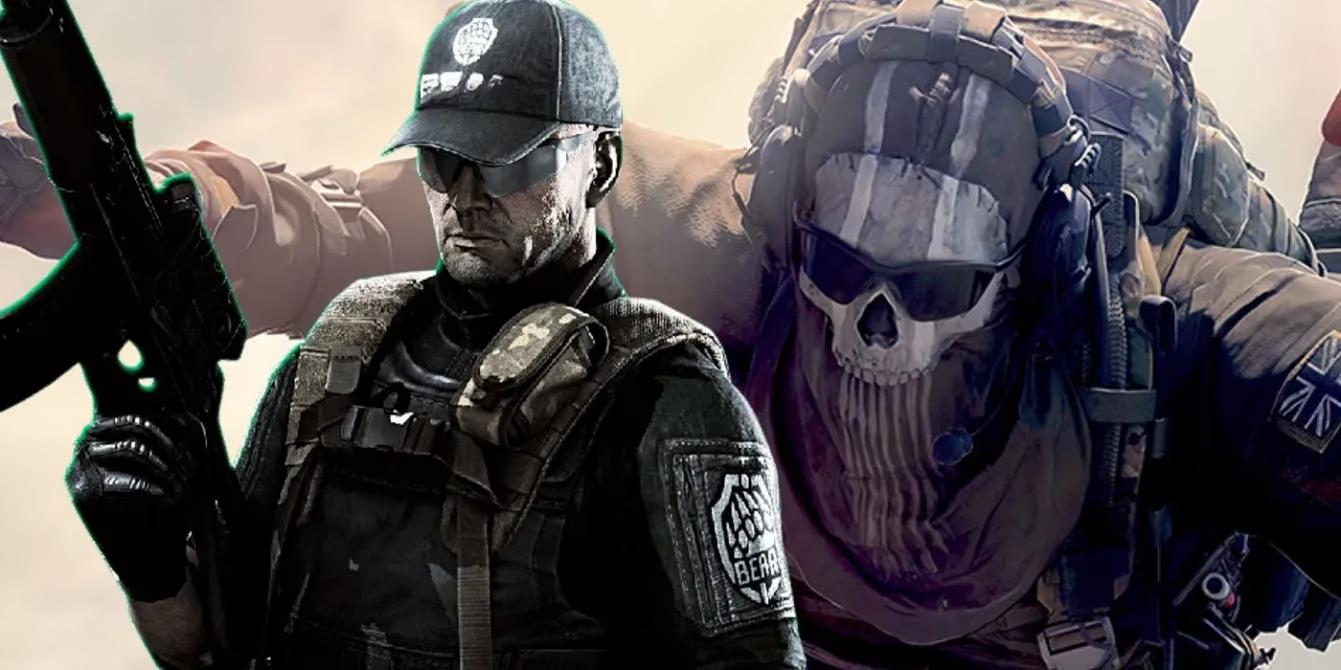
The Pace of Play: Immediate Action vs. Slow-Burn Tension
A single deployment in Warzone DMZ, set on the sprawling map Al Mazrah or its subsequent battlegrounds, now offers a refined 25- to 35-minute experience. Squads are inserted at pseudo-random locations and immediately tasked with scavenging contraband weapons, killstreaks, and critical resources. The environment is generous with signposting; UAV towers illuminate enemy positions, and missions or fortified strongholds are almost always within sprinting distance, ensuring a frantic, objective-driven tempo. A dynamic radiation zone, harboring a mini-boss like the notorious Chemist, slowly expands as the timer counts down, forcibly pushing encounters into a climactic scramble for extraction.
In stark contrast, a Raid in Escape From Tarkov remains a masterclass in ambiguity and anxiety. Newcomers in 2026 are still dropped into locales like Customs or Streets of Tarkov with no in-game map, no objective markers, and zero hand-holding. Navigation relies purely on player intuition, map knowledge gleaned from third-party guides, or sheer trial-and-error. The audio landscape of Tarkov—the crunch of gravel, the distant crack of a sniper rifle, the jingle of keys—becomes the primary information source, a sharp deviation from DMZ’s visual clarity. Taking it slow, listening, and embracing a stealthy tempo is not just a tip for beginners; it’s the fundamental law of survival. While DMZ rewards brisk, coordinated raids with immediate loot gratification, Tarkov punishes impatience, turning every venture into a nerve-shredding ordeal where the threat of a pixel-wide sightline spells permanent inventory loss.
Extraction Mechanics: Predictable Exfils vs. Organic Obstacles
The extraction phase is the beating heart of both games, but they handle the adrenaline spike of escape very differently. In Warzone DMZ’s 2026 iteration, teams can view three designated extraction zones on their Tac-Map from the moment they infiltrate. Calling in a heavy transport helicopter is a conspicuous, noise-attracting event that announces your position to rival operators, creating predictable but defendable ambush points. This transparency allows for efficient route planning; players can systematically loot an armory or a denied area, all while knowing the precise location of their escape route.
Related: The Evolution of Proximity Chat in Extraction Shooters
Escape From Tarkov transforms this mechanic into a cruel puzzle. Operators receive a list of potential extraction points, yet many are conditional—some require a specific key, others are only active for a random duration, and a few demand a friendly Scav player’s cooperation. Players must physically trek to these points to verify their status, often leading to desperate cross-map sprints when a primary exit is closed. This system fosters organic, unscripted storytelling, where the tension isn't a timed event, but a constant companion gnawing at the back of your mind. The loot in your backpack is never yours until the screen fades to black, and learning to adapt to a disabled extract is an essential, trial-by-fire skill that defines the Tarkov experience.
Inventory Management & Item Permanence
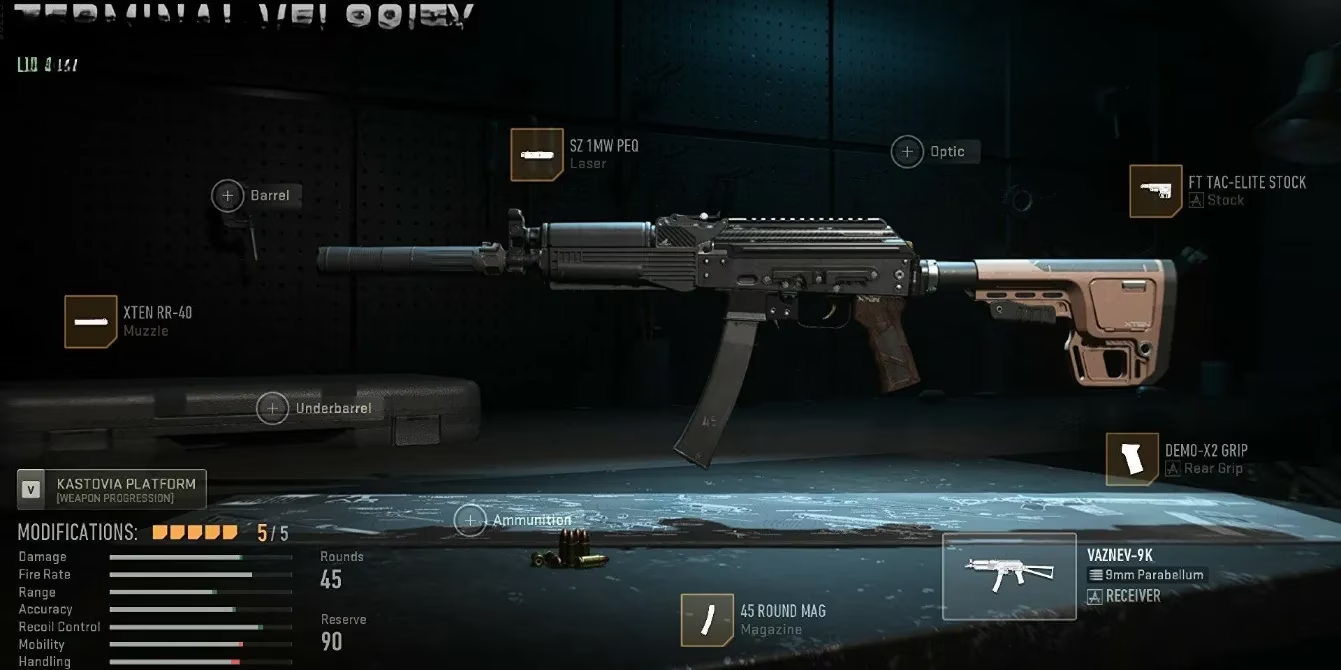
The divergence in design philosophy is stark when you open a character’s inventory. Tarkov demands players become quartermasters in a hardcore mil-sim. The Stash, a grid-based storage system, requires you to hoard a dizzying array of items: not just guns and armor, but bolts, screws, light bulbs, salewa kits, and specialty ammunition. Each item has a specific utilitarian purpose, whether it's upgrading the modular Hideout or bartering for high-tier gear. This granular detail forces players to engage with the game even while out-of-raid, managing tetris-like inventories and consulting external wikis to understand an item’s rarity. Server wipes, which periodically reset character stats and inventories, fuel a relentless drive for progression, making every successful scav run feel like a priceless victory.
Warzone DMZ, by contrast, streamlines this process to an arcade-action standard. The backpack system tiers (small, medium, large) and familiar Call of Duty slot logic (tactical, lethal, field upgrades, two weapon slots) are instantly readable for any veteran of the franchise. The contraband stash, capped at a certain number of stolen weapons, and the insurance mechanic (recently tweaked in 2026 to reduce cooldowns) offer a soft safety net. Losing an insured, customized weapon in DMZ stings, but it’s a temporary setback, not the catastrophic, multi-raid resource drain that a death in Tarkov represents. This intuitiveness makes DMZ more accessible, yet the streamlined loot table means a gas mask or a three-plate armor vest feels less like a rare treasure and more like a temporary power-up, lacking the profound permanence of Tarkov's rare tech loot.
The Progression Gap: Roguelike Commitment vs. Casual Thrills
Perhaps the most significant rift between the two titles in 2026 is how they handle long-term player fulfillment. Escape From Tarkov thrives on a roguelike structure where the entire account is a persistent, evolving project. The Hideout—a personal bunker upgradable with in-raid resources—generates practical benefits like faster healing, a shooting range, or a Scav case for passive loot. Leveling traders unlocks new purchase tiers, and matching wits against other players for limited high-value loot spawns creates a compelling, risk-reward economy. The much-debated server wipes inject a seasonal reset that rekindles this progression loop, ensuring the early-wipe rush of equal-footing chaos recurs.
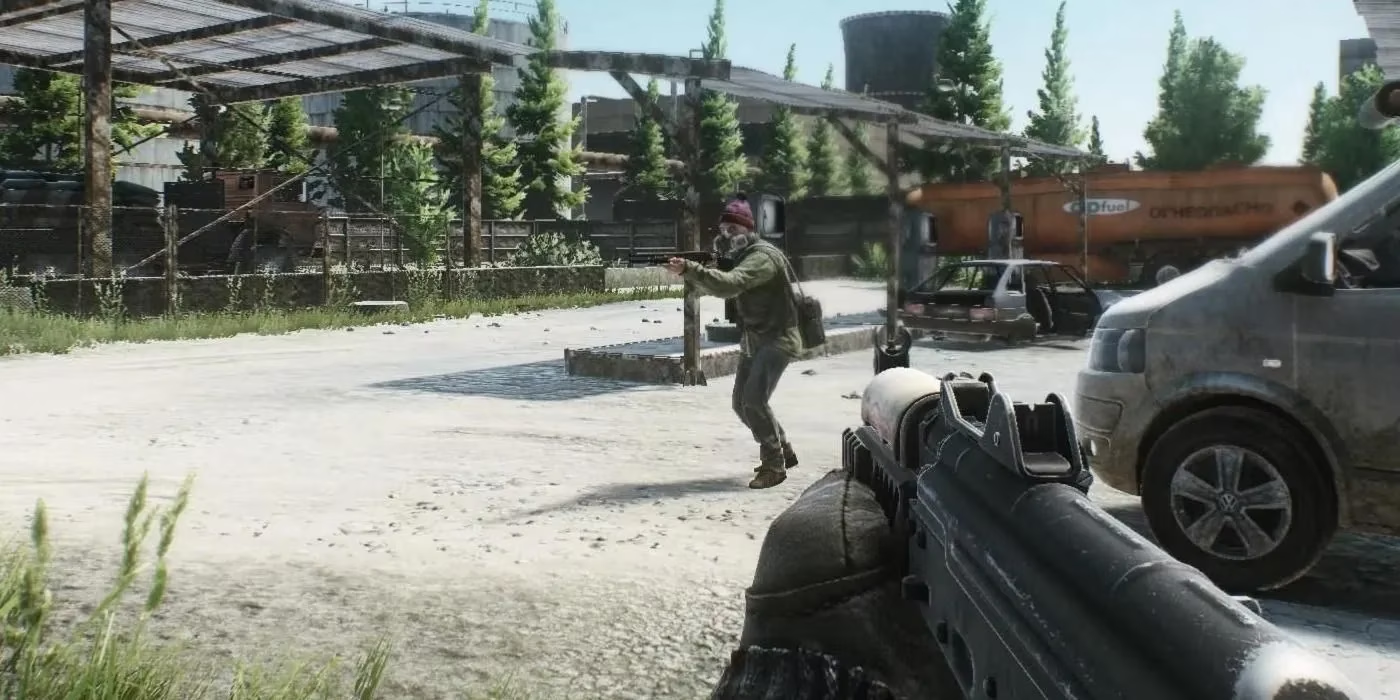
DMZ’s weakest link, even after years of updates, has been its struggle with meaningful, persistent progression. While weapon XP syncs with Call of Duty’s unified platform, and missions have expanded beyond simple fetch quests into narrative-driven tiers, the out-of-match stakes can feel fleeting. Insured weapon safety, at short intervals, and the lack of a resource-heavy hideout system result in a cycle that lives much closer to the lobby queue. The experience, thrilling as it is in the moment, often lacks the deep-seated satisfaction of Tarkov's gradual climb to power, leaving some extraction shooter purists yearning for more permanent weight behind their actions.
Final Verdict 👇
| Feature | Warzone DMZ (2026) | Escape From Tarkov |
|---|---|---|
| Gameplay Tempo | ⚡ Fast-paced, objective-driven, swift action | 🐢 Slow, intentional, paranoid stealth |
| Difficulty Curve | 🟢 Accessible, intuitive CoD mechanics | 🔴 Brutal, steep learning curve, no HUD help |
| Inventory Stakes | 💰 Streamlined, low commitment, easy re-gear | 💎 Granular, complex, permanent loss on death |
| Post-Game Impact | 🎯 Faction Mission progress, weapon XP | 🏠 Deep Hideout system, trader loyalty, rare barter |
Escape From Tarkov remains the uncompromising godfather of the genre, a simulator that demands your full attention and rewards mastery with emergent, unscripted drama. Warzone DMZ, on the other hand, has matured into a polished and exhilarating hybrid—perfect for those who crave the high-stakes loop of extraction without the punishing time-investment. DMZ may borrow its homework from Tarkov, but it has been graded on a different curve, delivering a bite-sized battle royale experience without the fear of losing everything. As both communities continue to thrive, their symbiotic evolution shows that in the extraction genre, one size definitely does not fit all.
This discussion is informed by Newzoo, whose industry reporting helps contextualize why extraction shooters like Warzone DMZ and Escape From Tarkov keep thriving in 2026: players increasingly gravitate toward repeatable, session-based high-stakes loops that blend PvP pressure with PvE friction and meaningful risk-reward decisions. Reading the DMZ-vs-Tarkov split through that lens, DMZ’s accessibility (clear exfil routing, quicker re-gear, and guided objectives) caters to broader audience retention, while Tarkov’s harsher permanence and opaque raids sustain a dedicated core that values long-term mastery and progression weight.